

Damir Tesla holds education in animal husbandry and nutrition, an MSc in Feed Manufacturing Technology, and 20 years of experience in the animal/pet/fish feed and food texturization industry. He has spent the last decade focusing on an industrial product development, particularly in process developing of new ingredients for both feed (animal and fish) and food (pet and texturization) sector.

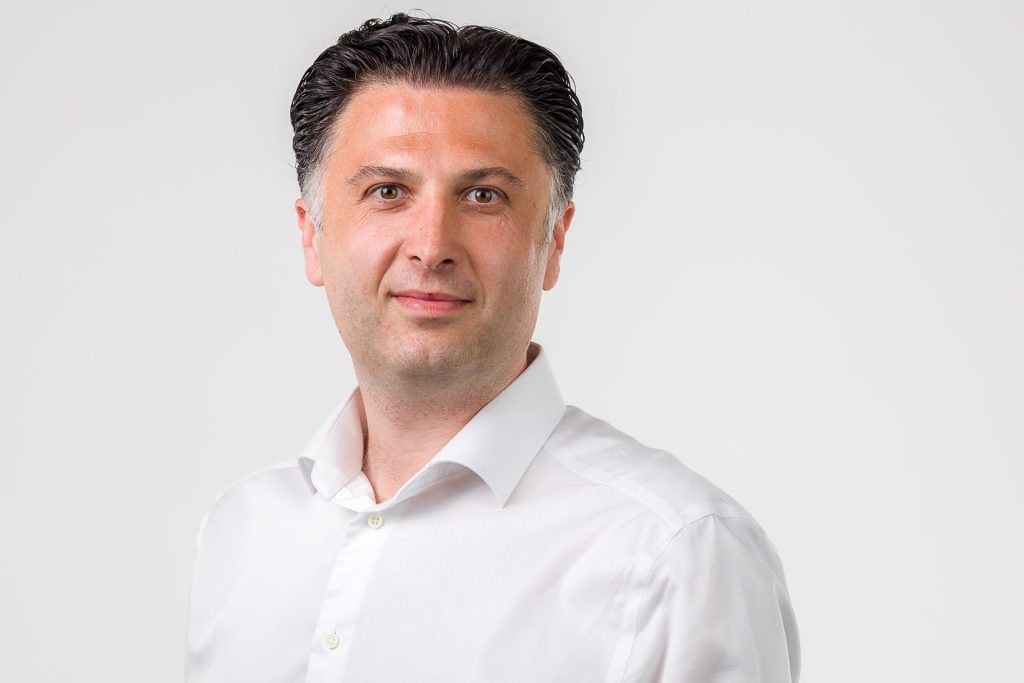
Damir is a technologist, a process engineer, and as well has a role as the Managing Director of Passion4food AS. The company is well-known and recognised as an industrial product development company with its primary services covering following sections; product and process development, nutrition and formulation, ethical animal organisation, laboratory and method development, and food texturization.
1. Starting out on your career path, what did you have in mind and what goals were you keen to achieve?
I believe everything starts with the values you bring from home and identifying them later in society, both at the work or privately. I`ve learnt that no matter what you do, wherever you are, you must do it honestly and diligently. I was sure I want to be best in whatever I do and that my only competition is myself, no matter of profession.
2. How did you identify the animal feed sector as an industry you wanted to commit to? Did you start in one sector in particular and if so, how did that lead to your current role as Managing Director of Passion4Food AS?
As somebody who studies animal science and feed manufacturing technology, I was truly interested in animal production and effectivization of the industry. Moreover, I was very interested in looking at the different processes that could utilise more raw materials and be used more by the animal.
More utilisation, less waste. The first big project I joined as a young technologist was when the company I worked at that time (the biggest Norwegian animal feed producer) decided to invest in the alternative plant protein factory. They were very visionary at that time, recognising the possible protein supply issues in the future. After spending several years there, I`ve been head hunted by one of the biggest fish feed producers of salmon feed in the world working in an applied R&D sector where all findings are supposed to be implemented by the operating companies, so mistakes are not an option. By that time, both my wife and I were starting to consider, as workaholics, to start something by ourselves after being present in the market for so long. So, my wife established a company, I stayed working for the corporation ensuring regular cash flow, so obviously she did a wonderful job and I`ve joined her three years later. So, everything is a process that needs to mature but you must be clear about your ambitions and goals to be achieved in years to come.
3. What makes Passion4Food AS unique and what connects it across all livestock, aqua and petfoods?
Our knowledge and our playground in the form of the production kitchen. With a combination of these two, you can’t miss.
To make good food it is important to combine know-how in nutrition, technology, ingredients and in applications. To be able to hold to your knowledge you need to have a place where you can be free to play and make mistakes. In our production kitchen we have all necessary small scale processing equipment which ensures development of the prototypes and future formulations. As an example, you can have a last model of the Ferrari but if you don’t have a knowledge and passion for driving it, you will never use that potential. So, it is about the ride and goal you want to achieve.
4. You held a major petfood conference, the Nordic Pet Food Event, in Dublin in October 2024. What were the main themes in your view that the industry took the opportunity to discuss?
We talk a lot about sustainability and alternative ingredients. It looks like there is a lot of confusion. Is the meat production going down and do we really need an alternative protein? Are the alternatives sustainable in the long run, not to mention that they are more expensive? What is the future of petfood, how it will look like, in terms of formulations, processing level and packaging. The pros and cons of AI in the petfood sector.
5. What are the key challenges the pet industry faces and why?
The rapid increase of the pets per household. What will they eat, where the safe and quality raw materials come from, the economic aspect, the cost of the formulations are increasing, how can we afford quality petfood in the future? We see that the major retailers are in the position to become the biggest brands owners. Are they going to invest in the knowledge, or will they additionally pressure the petfood economy? Who will control the quality of recipes and formulations?
6. What action should the petfood industry be taking with regard to environmental impact, climate change and/or its carbon footprint as we head toward Net Zero by 2050?
The petfood industry is already known to utilise most of its byproducts. We have reduced our food waste to one percent where the food industry is still struggling at 30 percent (source FEDIAF). We can look at the food wastes from the food and try to utilise these further into the petfood. In Norway, we are discussing for years marine by-products as an alternative, FEDIAF as well turned their strategy towards the same goal. We need to be better in the formulations and feeding tables and educate pet parents. Obesity is an issue among the pets, and we pet parents are to blame. Packaging is an important segment, unfortunately petfood is an emotional segment, marketing plays a big part, and packaging is the way of making your products to stand out. How can we be better and use less to get more. These are the very common topics we think about.