


by Ricardo Daura Garcia, Chief Commercial Officer, Algiecel, Denmark
The petfood industry is entering a new phase of innovation. While premium nutrition is already focused on delivering essential nutrients and incorporating specific functional ingredients to target individual health outcomes, the next generation of ingredient development is increasingly targeting broader biological functionality, enhanced formulation flexibility and more sustainable approaches to nutrition.
Today’s pet owners expect considerably more from the products they purchase. Nutrition is considered beyond meeting dietary requirements and encompasses healthy ageing, mobility, cognitive function, immune resilience, digestive health and skin and coat condition throughout an animal’s life. Sustainability has also become an important purchasing condition, as pet owners increasingly consider environmental impact, encouraging manufacturers to seek ingredients that combine proven functionality with responsible production methods.
These evolving demands drive interest in a new generation of marine ingredients from phototrophic microalgae. Known as a source of marine omega-3 fatty acids, they are now emerging as highly versatile biological platforms capable of providing a diverse portfolio of functional ingredients while contributing to a more resilient and sustainable marine supply chain.
Returning to the original source of marine nutrition
Marine omega-3 fatty acids have become indispensable ingredients in premium companion animal nutrition. Traditionally, these valuable nutrients have been sourced from fish oil, even if fish are not the original producers of Eicosapentaenoic Acid (EPA) and Docosahexaenoic Acid (DHA). They instead accumulate these fatty acids by feeding on marine microorganisms, principally Phytoplankton/Microalgae, that form the base of the marine food web and are the primary producers of omega-3 fatty acids.
The cultivation of microalgae allows direct access to the source of marine omega-3 fatty acids and reduces dependency on wild fish. Demand for omega-3 fatty acids continues to increase for aquaculture and petfood, as well as for human nutrition. Consequently, diversifying the sources of marine ingredients will improve long-term supply resilience and help preserve marine biodiversity. Additionally, microalgal cultures can crucially provide consistent ingredient quality independently of seasonal fishery and natural resource variability.


Photosynthesis creates more than omega-3
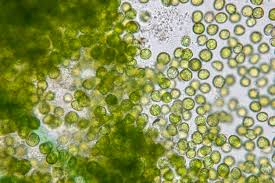
The nutritional complexity varies greatly between the different microbial organisms. Phototrophic microalgae use sunlight as their energy source to convert nutrients and carbon dioxide into biomass. It can naturally synthesise polar lipids, phospholipids, chlorophyll-associated compounds, antioxidants, carotenoids, sterols, vitamins, proteins, polysaccharides and secondary metabolites that are linked to their photosynthetic life.
Among the phototrophic microalgal species attracting growing scientific and commercial interest is Nannochloropsis oceanica, recognised for its naturally high EPA content and its rich profile of complementary bioactive compounds.
Understanding the biological matrix
Advancements in analytical technologies are revealing that they nutritional potential extends far beyond EPA.
EPA supplementation supports membrane functions and inflammatory balance, carotenoids contribute antioxidant protection, proteins provide essential amino acids and marine polysaccharides contribute to digestive and immune health.
Besides, marine biomass should be viewed as a coordinated bioactive matrix rather than a sum of isolated compounds, because the food structure itself can influence nutrient delivery and biological activity.
Increasing evidence suggests that the physiological activity of diets depends not only on the presence of individual ingredients but also on the complex natural composition. Synergistic interactions between lipids, proteins, antioxidants and polysaccharides may influence oxidative stability, digestion kinetics, nutrient release and ultimately the biological response in pets and humans.
Multiple ingredient opportunities
One of the most attractive characteristics of phototrophic microalgae is the range of ingredients that can be developed from a single biological source.
Whole biomass represents one valuable ingredient format, offering a synergistic nutrient matrix with the potential to deliver nutritional support across gut, metabolic, immune and antioxidant pathways.
Additionally, advances in downstream processing and biorefinery technologies are making it increasingly possible to selectively enrich groups of naturally associated compounds while preserving many of the interactions that contribute to their biological functionality. Microalgal cultures can simultaneously provide lipid-rich fractions, carotenoid concentrates and protein-rich ingredients and other valuable ingredients through biorefinery.
Where formulation objectives require greater precision, these enriched fractions can also serve as the starting point for the development of highly characterised individual nutritional ingredients that reinforce specific targets or complement existing formulation strategies. These ingredient options provide formulators with an increasingly sophisticated toolbox that combines the biological richness with the flexibility and sustainability profile required for modern product development.
A sustainable platform
Alongside nutritional performance, sustainability is becoming a driver of ingredient innovation. Phototrophic microalgae cultivated in closed photobioreactors provide a highly controlled production system that delivers consistent quality, full traceability and a year-round supply of ingredients, without relying on agricultural land or wild marine resources.
Closed photobioreactor systems enable efficient CO₂ utilisation, converting carbon into high-value, nutrient-rich ingredients for petfood, food and feed applications. High-end photobioreactor technologies and downstream processing powerfully combine to establish a scalable and sustainable platform technology that can unlock the full potential of phototrophic microalgae. These solutions will be available at commercial scale, with consistent quality, traceability and functionality.
Rather than focusing on a single product, microalgae producers must now create multifunctional whole-biomass ingredients, enriched functional fractions and highly characterised ingredients that will provide formulators with increasing flexibility to deliver broad nutritional support and reinforce formulations with targeted functional ingredients, all originating from the same sustainable marine bioresource.
The next frontier of ingredient discovery
As ingredient science evolves, attention is increasingly shifting from compositional analysis towards understanding biological functionality. Knowing that an ingredient contains EPA, proteins or carotenoids is only part of the story; equally important is understanding how processing and ingredient formulation influence nutrient accessibility, digestion, absorption and physiological activity.
These technologies are transforming ingredient development from a process based primarily on composition into one focused on biological performance, allowing researchers to better understand how photosynthetic marine ingredients behave within the digestive system.
The rapid evolution of analytical technologies is opening an entirely new chapter in microalgae research, providing insights into the relationships between individual compounds. It is now possible to better understand how compounds interact with each other, how ingredient composition influences digestion and nutritional performance. Furthermore, understanding how compounds work together becomes a key aspect of how to deliver enhanced functionality.
Looking ahead
The future of companion animal nutrition will be defined by the technologies capable of transforming sustainable biological resources into diverse, science-based nutritional solutions.
Phototrophic microalgae can provide a sustainable alternative to traditional marine resources while offering a biochemical diversity that extends beyond individual nutrients, including multifunctional ingredients and bioactive fractions.
By combining industrial phototrophic cultivation, precision downstream processing and applied ingredient science, microalgae can produce a new generation of natural and functional ingredients for healthier companion animals and a more sustainable food and feed production system.