

by Del Williams, Technical Writer, USA


Unlike conventional dryers, an efficient new design expedites kibble production while maintaining precise moisture and product quality. In testing, the system reduces drying time by 80 percent, increases yields, and improves product quality.
The dry petfood market is valued at approximately US$90.48 billion, with forecasts predicting growth to US$134.14 billion by 2029 at a compound annual growth rate (CAGR) of 8.19 percent, as stated by Mordor Intelligence. Although the dry petfood market is expanding, production is concentrated among a small number of companies, making it a highly competitive industry. Consequently, processors prioritise increasing production speed, maximising yields, and improving product quality.
Kibble Production
Kibble, specifically, is typically produced through an extrusion process, cut into pellets, and then dried prior to packaging. However, traditional kibble drying systems have remained unchanged for decades. These systems generally rely on fans that use convective heat—similar to an air fryer—to circulate hot air around kibble as it is conveyed through the system. Achieving the ideal moisture level typically requires several passes through the dryer.
Conventional belt dryers, often multi-pass, while functional, cannot force air evenly throughout the product bed. Processors often resort to over-drying the product to avoid the potentially disastrous consequences of overly moist kibble, including mold and pathogen growth. This reduces processors’ profit by decreasing their overall yield, reducing throughput, and using excess energy.
“Inefficient, uneven drying contributes to uneven moisture content in the kibble. This negatively impacts both final product quality and profits,” says Dan McClelland, Business Development Manager at Laitram Machinery, an operating division of Laitram LLC and a recent entrant into the kibble dryer market and global leader in food processing equipment such as steam cookers, blanchers, pasteurizers, roasters, and vision graders used globally in many industries.

An innovate solution
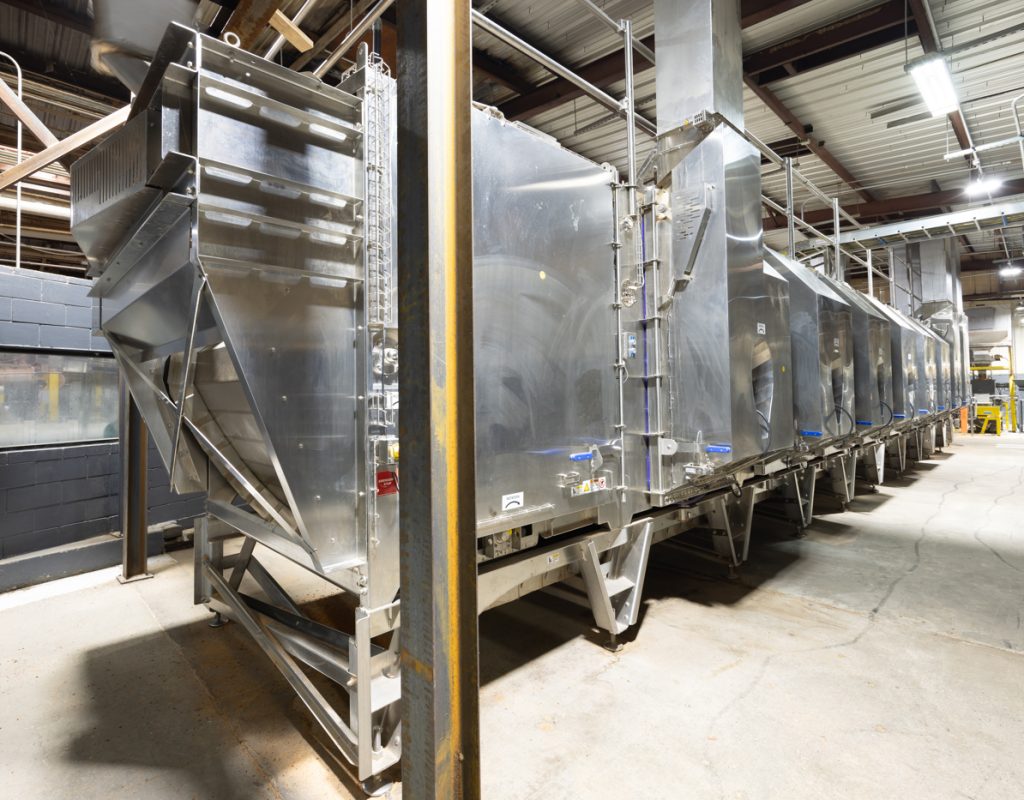
In search of a solution, Laitram Machinery, which has considerable expertise in heat transfer and food safety from nearly 75 years in the industry of food process innovation, developed an advanced high-efficiency kibble dryer called The Precision Force™ System. The system uses high-speed, high-volume forced convection technology to dry kibble faster and more efficiently, increasing yield, drastically reducing drying times and improving product quality.
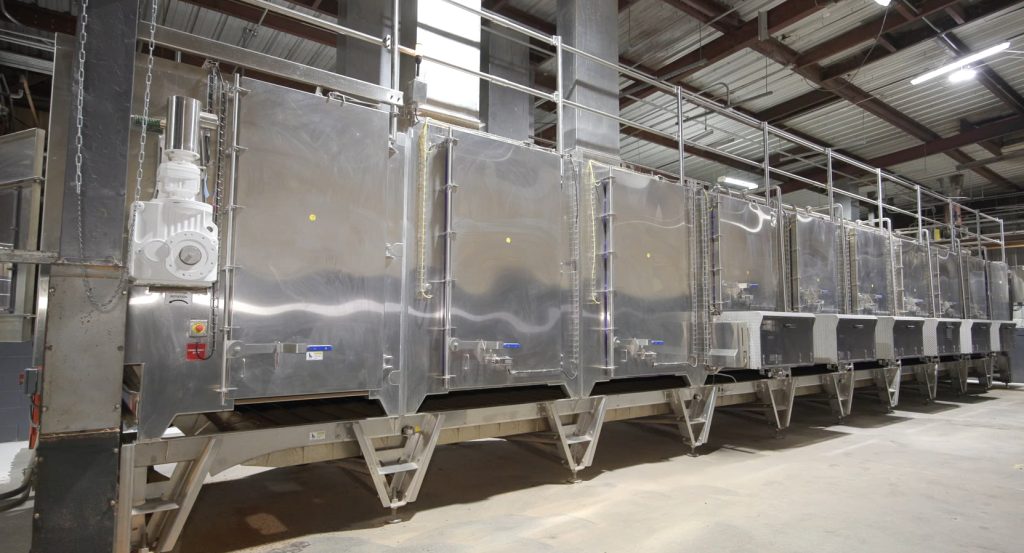
The high-efficiency kibble dryer utilises numerous wall-mounted fans to drive large amounts of air throughout all the product as it is conveyed. Laitram’s precision design and patented technology provides more uniform application of heat throughout the full width and depth of the kibble bed as it is conveyed, explains Laitram Machinery’s Global Account Manager Hayley Brashier.
“The high-efficiency kibble dryer increases the airflow and heat transfer tenfold, compared to a conventional dryer,” says Brashier.
According to Brashier, “The process paradoxically involves lower temperatures than conventional kibble dryers, which allows more precise moisture control along with more consistent and even drying. The product can be dried in one continuous, end-to-end process and does not require agitating, turning product, or making multiple passes.”

Improving yield and profitability
Laitram Machinery’s Precision Force kibble dryer was field tested at a large, privately-owned, petfood processor in the United States. To account for drying inconsistencies and prevent out-of-spec products, they aimed for a moisture level of 8.5-9 percent, intentionally over-drying the product slightly.
“It took the processor 25 to 40 minutes to dry kibble with their existing dryer. In a field test, the high-efficiency kibble dryer uniformly dried the same product within seven to 10 minutes,” says Brashier.
Initial feedback indicates that this process minimises fines (dust and debris) resulting from overcooked products, which are more brittle and can break during traditional dryer processing. As a result, it improves both product yield and profitability.
“The process has a significant payback because it reduces drying times up to 80 percent and offers yield improvements of one to four percent depending upon the current process performance. The product is also more consistent with uniform moisture, texture, and colour,” adds Brashier.
She explains that the faster drying of kibble has reduced the need to interrupt longer production runs to address urgent orders. This enhancement has boosted the overall efficiency of the petfood processor’s production operations.
In addition, more accurately controlling the moisture content in dried kibble facilitates product quality and greater profit for a product sold by weight.
“With more consistency and precise control, processors can increase the moisture in their kibble without risking out-of-spec product. Higher moisture content per pound of product also enhances profitability,” says Brashier.

Importance of cooling
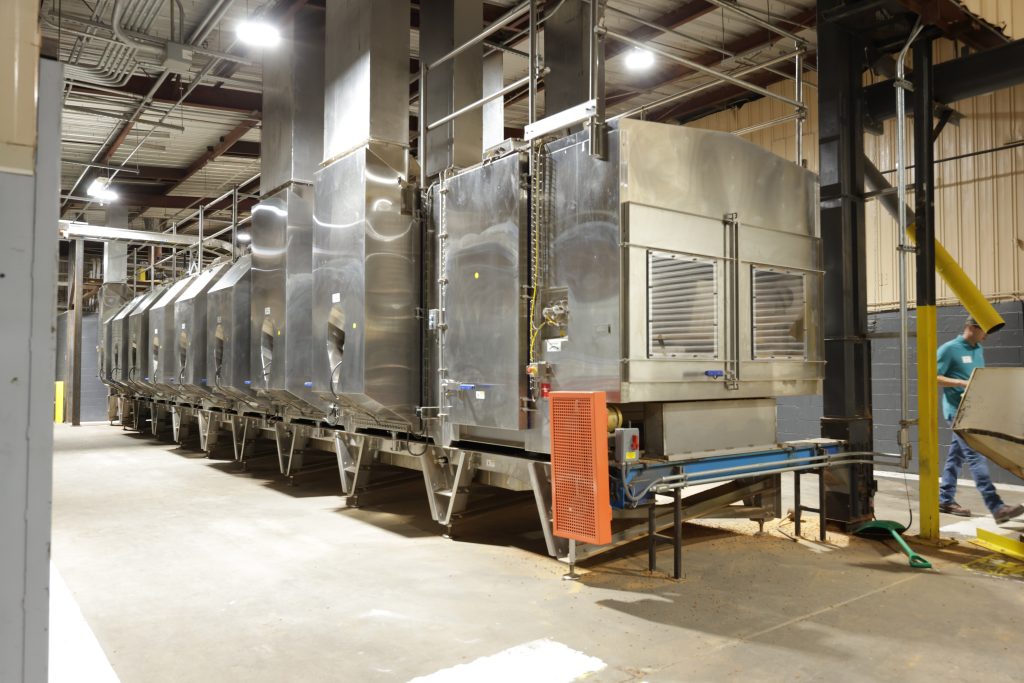
According to Brashier, post-drying, kibble also needs proper cooling to prevent moisture reabsorption since inadequate cooling can lead to condensation and spoilage. Consequently, when required, Laitram Machinery builds an inline cooler that is integrated with the high-efficiency kibble dryer.
Brashier notes that the kibble dryer features a modular design, allowing for adjustable capacities with separate controls for the drying and cooling zones.
“The modular system can be customised to accommodate specific production needs, offering flexibility in its footprint and enabling seamless integration into existing production lines,” says Brashier.
Increasing safety
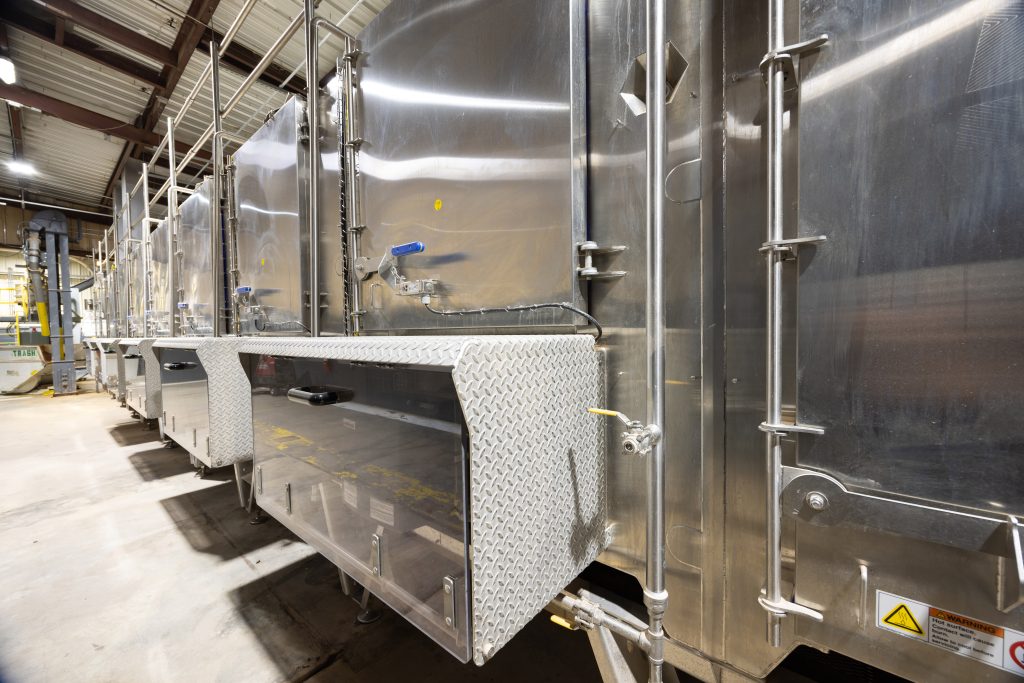
To increase petfood safety, the kibble dryer is also designed to offer full access to the machine’s interior through open doors, facilitating complete cleaning between production runs. The system’s open, sanitary stainless-steel design further expedites production startup, changeover, and shutdown. Conventional dryers often have restricted interior access, making cleaning more difficult and time-consuming and increasing the risk of potential product contamination.
Enhancing efficiency
In the long run, utilising a high-efficiency kibble dryer also minimises system wear since greater volumes can be processed in shorter times. More efficient processing and reduced run times translate into less maintenance and repair for the same volume of product, lowering operational costs.
Petfood processors interested in evaluating the precision drying system can schedule an on-site visit with Laitram Machinery’s mobile demonstration units.
“We can hook up a demonstration unit to their gas supply or use propane tanks so they can run tests with their product and see how the system works for them,” says Brashier. Alternatively, interested parties can visit Laitram Machinery’s facility in New Orleans to run tests on their product.
Laitram Machinery will have a booth at the Petfood Forum 2025, which is scheduled for April 28-30 at the Kansas City Convention Center in Kansas City, Missouri, USA.
For petfood processors, addressing kibble drying inefficiencies through improved technology is essential for enhancing overall productivity, product quality, and sustainability in the industry.
Taking advantage of the industry’s most efficient means to dry and process high-quality kibble will improve the processor’s competitiveness and bottom line.
Published in the March 2025 issue of International Petfood.