


by Dr Francesca Susca, Global Category Manager, Lallemand Animal Nutrition, Italy
As global protein demand surges and consumers increasingly prioritise sustainability and animal welfare, petfood manufacturers are fundamentally rethinking ingredient sourcing. This trend is also reflected in the petfood market, where pet owners are increasingly mirroring their own dietary philosophies in their pets’ food choices, a phenomenon known as the humanisation trend. Today’s sophisticated pet parents are driving unprecedented demand for transparent labelling and clean ingredients. As a result, innovative protein sources are becoming increasingly important in the pet industry to meet the rising demand for nutritious petfood.
Science of protein digestibility
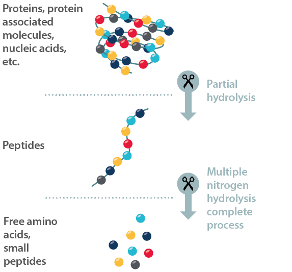
While proteins are complex molecules made of amino acids, their size and structure directly impact how well they can be used by the body. Smaller proteins and peptides that have undergone hydrolysis are typically more bioavailable than larger, unprocessed proteins (Figure 1).
Protein digestion is a complex, enzyme-driven process that depends on pH. In monogastric animals like canine and feline, digestion begins in the stomach where proteins are denatured by pepsin. In the duodenum, pancreatic and intestinal enzymes further break down proteins, with amino acids and small peptides being absorbed mainly in the jejunum. The large intestine then supports microbial fermentation, producing short-chain fatty acids (SCFAs). Providing pets with pre-processed protein sources rich in free amino acids and small peptides can support better gut absorption.

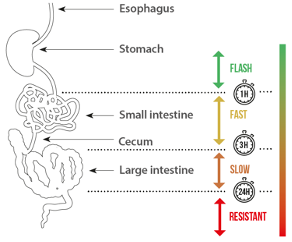
However, protein digestibility tells only part of the story. Understanding absorption kinetics – how quickly proteins are absorbed – gives nutritionists a more complete picture of protein quality. These kinetics fall into four categories: flash, fast, slow, and resistant absorption (Figure 2).
Indigestible proteins can feed harmful gut bacteria, leading to proteolytic fermentation and potential digestive issues, like diarrhoea, due to microbial imbalance. For pets, higher protein digestibility means a more effective nutrient source, supporting overall digestive health.

Enhanced protein absorption
Hydrolysed yeast represents a significant advancement in protein engineering, delivering highly digestible nutrients through controlled enzymatic processes. During production, both endogenous and exogenous enzymes facilitate precise cell lysis, resulting in fragmented proteins and nucleic acids of optimal molecular size and ensuring a high level of functional ingredients and consistency.
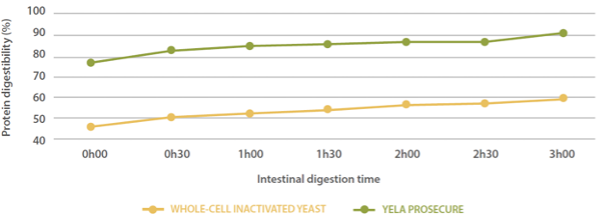
Comparative analysis reveals striking differences in protein digestibility between hydrolysed and whole-cell inactivated yeasts (Figure 3). Within the first three hours of digestion – the critical window for young animals – whole-cell inactivated yeast shows limited digestibility, reaching only 46 percent post-gastric phase and 60 percent after three hours. This lower bioavailability stems from nutrients remaining trapped within intact cell walls.
In contrast, specifically designed hydrolysed yeast demonstrates superior performance: 77 percent protein digestibility post-gastric phase, advancing to over 90 percent within three hours. This enhanced bioavailability results from the controlled hydrolysis process, which pre-fragments proteins into readily absorbable peptides. This rapid digestibility is particularly valuable for young pets whose developing digestive systems benefit significantly from pre-fragmented proteins, enabling efficient protein digestibility and therefore nutrient bioavailability in the gut.

Enhancing palatability
Free amino acids play a dual role in pet nutrition – beyond their nutritional value, they significantly influence taste perception and feeding behaviour, including feed intake, Recent research demonstrates the impact of specifically designed hydrolysed yeast (SDHY) on palatability in premium dry petfood (Figure 4).
In a controlled study involving 40 medium-sized adult dogs over four days, researchers compared two diets: a control formula coated with one percent premium digest versus a formula coated with one percent SDHY. The results were compelling – dogs consistently showed higher feed intake with the SDHY-enhanced diet. This increased palatability likely stems from the yeast’s optimised free amino acid profile.

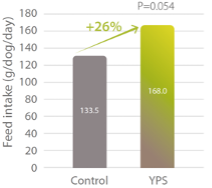
diet vs specifically designed hydrolysed yeast diet
This finding highlights an important dual benefit: SDHY not only improves protein digestibility but also enhances the eating experience, addressing both nutritional efficiency and pet satisfaction in a single ingredient solution.
Innovative protein solutions
As petfood manufacturers navigate increasing market demands and evolving health concerns, the search for functional protein sources has intensified. Specifically designed hydrolysed yeast emerges as a pioneering solution, offering unique benefits through its controlled protein fragmentation process. The precise hydrolysis of yeast proteins yields a standardised profile of free amino acids and small peptides, delivering multiple advantages: enhanced digestibility, improved gut health support, and increased palatability. This profile proves particularly valuable for young animals and specialised diets, such as hypoallergenic formulations, where protein quality and bioavailability are paramount.
Published in the January 2025 issue of International Petfood.