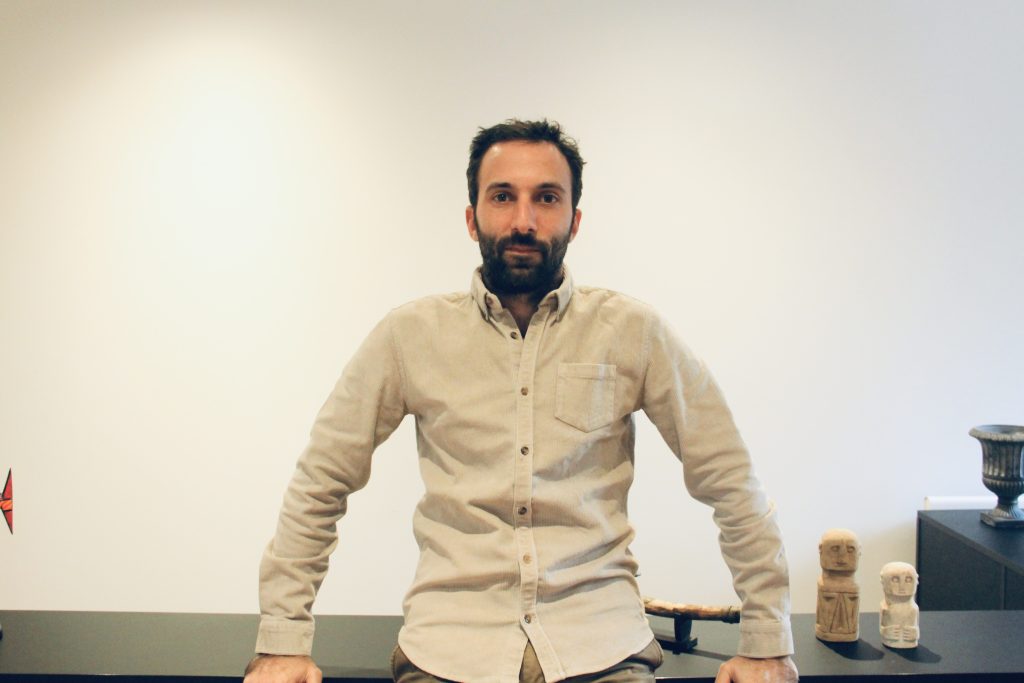
Cedric Meymarian is a French entrepreneur specialising in the food and feed industries, with extensive experience across Asian markets. He is committed to promoting innovative and sustainable solutions that enhance animal health. After beginning his career in the food sector, Cedric transitioned to the feed industry, working with major regional players with a focus on Southeast Asia and the Pacific. His early achievements included advancing livestock nutrition and enriching human food with omega-3 through animal feed. In recent years, he has concentrated on the petfood sector, providing sustainable omega-3 solutions to key players across Asia and the Middle East.
You have an extensive career in this field. How did you get into this industry?
I started in the feed industry with a French company called Roullier group, in their subsidiary in Malaysia. We then met with O&T Farms back in 2017 at VIV Asia exhibition, and we are working together for more than eight years now. I’m in charge of international business for them, with a strong focus on Asia and Middle East, while North, Central and South America is managed from our Canadian office.
Omega-3s are increasingly important in pet nutrition. What market trends are you seeing, and how is O&T Farms adapting its sales and marketing strategies to meet evolving customer demands?
The worldwide omega-3 demand is increasing every year, not only in pet nutrition but also in swine, poultry and dairy. Today, we all want the best for our companion animals: high-quality petfood which is sustainable, safe and good for their health.
At O&T Farms, our challenge is to be able to support this demand by bringing the product which fits our clients’ expectations. As a privately owned company, we have flexibility and a high production capacity. Furthermore, we do grow with our client requests and created the linPET formula working with industry associates and a client.
You mentioned that O&T Farms got into petfood industry by accident. Could you elaborate on this?
Our main business was first the layer industry for omega-3 eggs production in North America, before getting into the petfood, dairy, chicken or swine industries. A major player in the North American petfood industry had heard of our product, and started purchasing it. They did not disclose anything at the beginning, and we believed they were using for producing omega-3 eggs. We discovered several months later that our product had been selected for its stability in the use of petfood formulations requiring an omega-3 enrichment.
The industry is currently facing an omega-3 ingredient shortage due to its reliance on marine sources. Could you explain how your production of omega-3 from flaxseed, canola, pulses and alfalfa helps address this issue?
Our patented technology allows us to produce a very stable omega-3 ingredient from land-based sources, which is 100 percent sustainable compared to marine sources. Our product is composed of flaxseed, the richest form of land-based omega-3’s, with field peas added to the mixture for their unique protein/starch base, having an excellent level of absorption. This protein/starch carrier also adds a unique barrier for linPET, in that it is shelf stable for 14 months under tropical conditions.
Does your process completely eliminate dependence on marine ingredients?
The omega-3’s family is composed by DHA, EPA and ALA. While EPA and DHA come from marine sources, ALA, alpha linolenic acid, is an omega-3 profile which is coming from largely land-based sources. Of all the omega-3 fatty acids, ALA is the only one that is classified as ‘essential’. This means it is required for the body to function properly, but it cannot be produced within the body so it must come from the diet. Other omega-3 fatty acids like EPA and DHA can be produced by the body when ALA is present; therefore, these omega-3s are not classified as ‘essential’ nutrients and are not required as part of a healthy diet. Although EPA and DHA have received much of the spotlight related to their role in human health, ALA also plays a critical role for animals and humans.
In your view, what are the main consequences of the growing unreliability of marine-based omega-3 sources, and how do we tackle this issue?
There are many consequences. For petfood manufacturers, using an unreliable marine-based omega-3 source will result in non-reliable petfood.
There are also quality issues on the final product. A non-protected omega-3 ingredient like fish oil will oxidise quickly, as will the finished product, leading to spoilage. Without stabilisation of the omega-3 fats, the value-added nutritional properties would be minimised. It also leads to an off smell from the product due to the oxidation.
Sustainability is also a key advantage of linPET. Fish oil is not stable anymore due to less concentration of omega-3s in the fish population. The situation will likely continue to deteriorate.
We can overcome this challenge of sustainably sourcing omega-3 by using products like linPET into petfood formulation, content in the fact that it is 100 percent land-based, and exceptionally stable.