by Mudita Yadav, International Petfood
The American Pet Products Association (APPA) has released its 2026 Dog Report, based on the 2025 National Pet Owners Survey (NPOS). The report highlights several trends shaping the pet industry, including multi-generational shifts among pet owners, expanding dog and cat ownership, a strengthening human-animal bond and the growing influence of influencers on product discovery and purchasing decisions.
Expansion in dog ownership
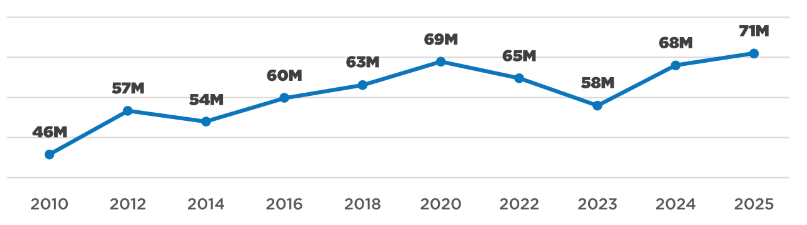
The report finds that dog ownership continued to expand in 2025, even as owners became more careful about how they allocated their spending. According to the APPA 2026 Dog Report, 53 percent of US households owned a dog in 2025, up from 51 percent in 2024. This represents 71 million dog-owning households, up four percent from the previous year.
The increase is significant because it comes against a backdrop of continued growth in the wider US pet market. Total pet industry expenditure reached US$158 billion in 2025, up 3.7 percent. APPA projects expenditure to reach US$165 billion in 2026. The association expects full-year growth in 2026 to be close to 4.4 percent, with around two percentage points of that growth driven by inflation.
Yet, the growth in ownership does not mean dog owners are simply spending more across every category. APPA’s findings point to a more complex picture. Owners are still investing in their dogs, but they are making more deliberate decisions about where their money goes.
This spending behaviour is particularly relevant to the petfood sector, as food remains one of the categories that owners appear to protect, while other areas of spending face greater scrutiny.
Spending shifts, food remains a priority
APPA finds that many dog owners are adopting a more value-driven and budget-conscious approach in 2025. Instead of increasing expenditure across the board, owners increasingly reallocated their budgets towards products and services they considered essential.
Food was among the core categories that owners sought to protect. By contrast, some products and services were viewed as more flexible. Spending in these areas could be reduced, delayed or reconsidered when the household budget tightens.
This suggests that the definition of ‘value’ is changing. The value is not necessarily the same as the lowest price. APPA’s findings indicate that owners are increasingly considering the functional return of a purchase. Health, safety and daily maintenance appear to carry greater weight when owners decide where to spend.
This creates a different environment for companies serving the dog market. A growing customer base does not automatically create an opportunity for unlimited premiumisation. Owners may remain interested in higher-value products, but those products need to justify their place in the household budget.
The change in spending behaviour stands out as one of the most notable findings in the report. The shift is better described as rebalancing rather than retreat. Dog owners remain engaged and continue to spend on their animals, but they are making more intentional trade-offs in how they allocate their budgets.
APPA identifies food as one of the core areas that owners protected while adjusting other parts of their budgets. This does not mean that all food purchases are immune to budget pressure. Rather, it indicates that feeding remains a fundamental part of dog ownership. Owners can reduce spending on some discretionary items, and feeding remains a daily requirement, making petfood a core category of dog ownership.
The finding highlights the importance of understanding what consumers consider essential. Product positioning may increasingly depend on demonstrating practical value rather than relying solely on premium credentials.
The report’s spending analysis shows a more selective approach. Owners are weighing the perceived benefits of purchases and directing spending towards areas they consider most important. The distinction highlights that market opportunity may lie not simply in selling more expensive products, but in communicating clear functional benefits that consumers can understand.
Growth does not remove economic pressure
The report’s findings show why overall market growth needs to be considered alongside consumer behaviour.
The US pet market reached US$158 billion in 2025, while dog ownership increased to 71 million households. On the surface, both figures suggest market expansion. But APPA’s analysis shows that growth is not evenly distributed across categories. Dog owners are making choices about which purchases matter most.
This creates a more selective market in which categories perceived as essential can remain relatively resilient, while discretionary products and services may face greater pressure. The same household can therefore continue to spend substantially on its dog while reducing spending in selected areas.
Market growth should not be interpreted simply as a means to increase prices or add premium features. The stronger opportunity may be to understand how owners assess value and which needs they are unwilling to compromise on.
Source: APPA 2026 Dog Report
Online channels gain importance
APPA reports that the wider pet market also showed the influence of online purchasing. The online channels were a major driver of performance in 2025, with sequential improvement during the year. This development sits alongside another change identified by APPA: influencer-led product discovery and purchasing decisions are helping shape the direction of the industry.
Together, these trends suggest that the route between product discovery and purchase is changing. Dog owners are not only deciding what to buy based on traditional retail experiences. Digital channels are playing a larger role in how products reach consumers and how purchasing decisions are made. It places greater importance on communicating product value clearly in the petfood market. When consumers are more budget-conscious, they may assess a product more closely before making a purchase.
However, the APPA data does not establish that online channels alone are responsible for changes in individual purchasing behaviour. It instead identifies online channels as a major contributor to overall industry performance.
A changing ownership base
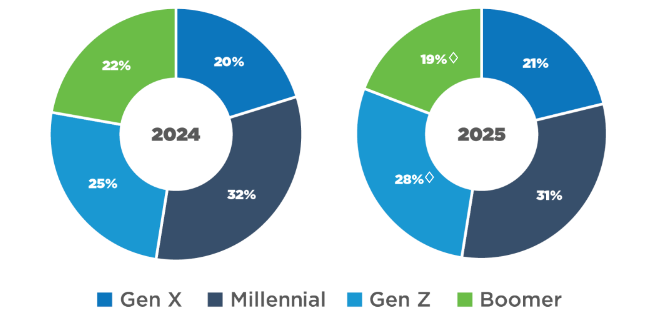
APPA reports that the growth of dog ownership is also becoming more multi-generational. The younger generations have been major drivers of pet ownership growth in recent years. In 2025, however, the expansion was increasingly multi-generational. Gen Z dog owners increased from 20 percent to 21 percent, a five percent year-on-year increase. Gen X ownership rose from 25 percent to 28 percent, representing a 12 percent increase.
The figures indicate that the dog market is not being shaped by a single consumer group. Different generations are entering and expanding their involvement in dog ownership. Their purchasing decisions may therefore reflect different household circumstances and priorities. At the same time, APPA’s findings also indicate a strengthening human-animal bond across the industry.
The combination of stronger attachment and tighter spending creates an interesting dynamic. Owners may be unwilling to cut spending on areas they believe directly affect their dogs’ well-being, choosing instead to save elsewhere.
Statistically significant from 2024
Source: APPA 2026 Dog Report
A market defined by priorities
APPA’s 2026 Dog Report points to a dog market that is growing but also becoming more selective. Dog ownership reached 53 percent of US households in 2025, representing 71 million households. At the same time, owners are reassessing how they allocate their budgets.
This creates a mixed environment for the pet industry. A larger dog-owning population expands the potential consumer base, while tighter spending priorities place greater emphasis on value. Owners are protecting essential categories and reassessing purchases they consider more discretionary.
For the petfood sector, this creates both resilience and pressure. Food remains an essential part of daily dog care, but owners are becoming more selective about the value they expect from their purchases. Products that address clear needs in areas such as health, safety and daily care may therefore remain important as owners assess where to spend.
The shift is not a sign that owners are becoming less committed to their dogs. Rather, it reflects a more considered approach to spending. Owners continue to invest in their pets, but they are making more intentional trade-offs and prioritising purchases they consider most important.
The market is also becoming more multi-generational and digitally influenced. APPA identifies growth among both Gen Z and Gen X dog owners, while online channels and influencer-led product discovery are helping to shape purchasing decisions. The implication is clear for petfood manufacturers that market growth alone does not guarantee stronger demand across every product or price segment. Understanding what owners value and why they prioritise certain purchases over others will be increasingly important as the US dog market continues to evolve.