by Dr Shiguang Yu, Global Director Pet Nutrition, dsm-firmenich, USA
Pet nutrition has moved beyond basic nutritional adequacy. Functional ingredients that support digestive health, cognitive function, joint mobility and immune resilience are now central to product development, alongside growing expectations around sustainability and regulatory compliance. Petfoods are increasingly tailored by life stage, body size, breed and specific health needs, raising the bar for both formulation and execution.
This shift has placed new demands on manufacturing environments. Systems originally designed to produce standardised vitamin and mineral premixes are now expected to handle more complex formulations, incorporate sensitive functional ingredients and operate under tighter requirements for safety, traceability and consistency.
As a result, flexibility can no longer be treated as an operational add-on. In modern pet nutrition manufacturing, it means having the capability to manage variation in formulations, ingredient behaviour and batch size while upholding standards in precision, repeatability or control—ensuring that nutritional intent is delivered reliably at scale.
Flexibility as a non-negotiable
Several forces are converging to reshape what pet nutrition manufacturing must deliver. Ingredient portfolios are expanding to include omega-3s, carotenoids, microbiome solutions, botanicals and other components with very different stability and handling requirements. At the same time, expectations around traceability, contamination control and sustainability reporting are rising across global markets. Product development cycles are shortening, while production runs are becoming smaller and more varied. Regulators and consumers—particularly in premium and functional segments—are also scrutinising not just what goes into petfood, but how it is manufactured.
As formulation complexity increases, so too does the risk of inconsistency. Frequent changeovers, smaller batches and diverse functional ingredients place strain on manufacturing systems, especially where flexibility depends heavily on manual intervention. In these environments, risks increase around dosing accuracy, cross-contamination, poorly homogeneous nutrient distribution and validation gaps. The challenge for manufacturers is not simply managing more variation, but doing so without eroding control, reliability or confidence in the finished product.
Building flexibility into manufacturing
This is where plant design and process philosophy become decisive. Flexibility layered onto legacy systems can introduce new vulnerabilities. By contrast, flexibility that is designed into the manufacturing environment from the outset can support complexity while preserving tight control over critical parameters.
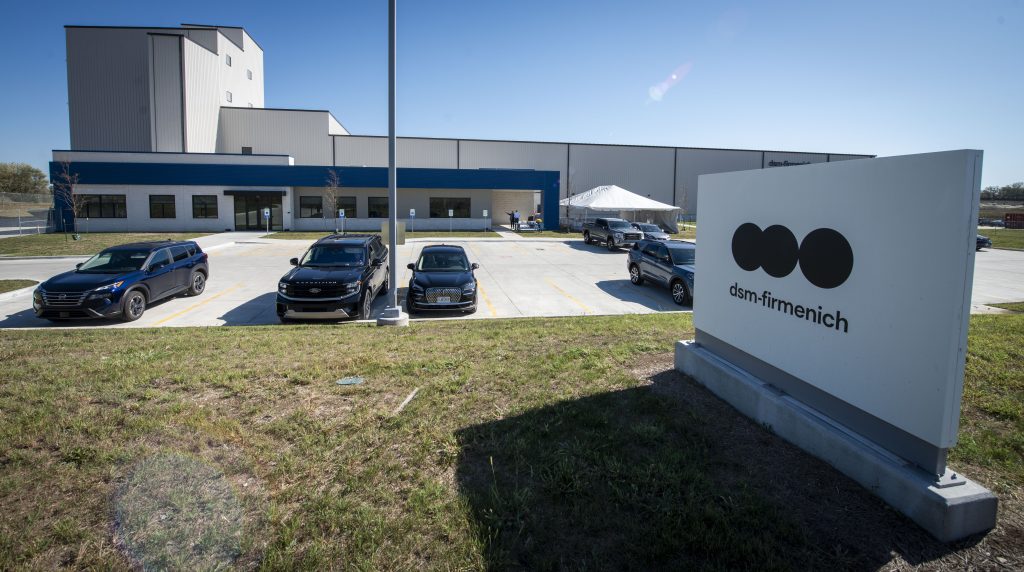
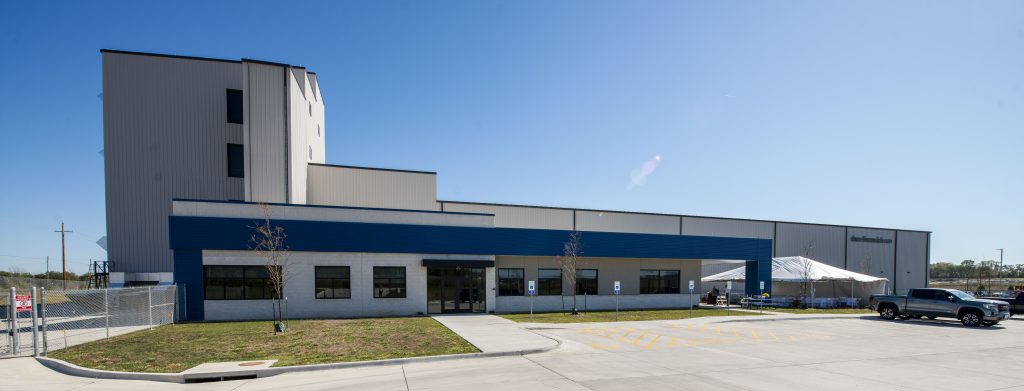
In practice, this requires facilities designed specifically to handle a broader range of ingredients, smaller batch sizes and more customised formulations. Purpose-built premix plants, such as the dsm-firmenich NextGen facilities in Haag, Austria, and Tonganoxie, Kansas, USA, illustrate this shift in approach. Developed as dedicated pet-focused facilities, both sites were configured to accommodate growing formulation complexity while maintaining batch-to-batch consistency. Advanced blending systems allow for the integration of functional ingredients such as vitamins, minerals and sensitive microingredients, including carotenoids, omega-3s, plant powders and microbiome-related components.
Central to this approach is a high degree of automation and segregation. Automated micro-ingredient dosing systems significantly reduce reliance on manual handling, improving dosing accuracy and repeatability while lowering the risk of contamination. Sensitive or higher-risk ingredients are processed through dedicated, controlled pathways, supported by unified quality systems that reinforce traceability and consistency across a wide range of formulations.
While both facilities are built around the same core principles, each reflects the regulatory and market realities of its region. In Europe, the Haag facility was created through the consolidation of 13 separate production sites into one pet-dedicated manufacturing hub. This consolidation eliminated inter-site variability and enabled quality, regulatory and sustainability systems to be embedded within one controlled environment. Advanced blending technologies and specialist application expertise support the safe handling and effective integration of diverse functional ingredients, while alignment with EU and FEDIAF requirements helps ensure consistent compliance across European markets.
In North America, the state-of-the-art Tonganoxie facility represents a complementary expression of designed adaptability. Located within the US Animal Health Corridor, the facility combines proximity to customers with a high level of automation. Petfood manufacturers can benefit from fully automated micro-ingredient addition, enabling closed-system, fully traceable batch assembly, with each ingredient container digitally tracked from raw material to finished premix. This approach minimises ingredient exposure, supports precise dosing and reduces cross-contamination risk, even as formulations become more complex or batch sizes more variable.
Science-led innovation and operational resilience
The value of flexibility becomes most apparent when viewed through the lens of innovation. Modern pet nutrition innovation depends on the ability to translate scientific insight into products that can be produced consistently at scale. Ingredients that show promise in research or pilot trials must also withstand commercial processing, storage and distribution without impacting efficacy or stability.
Flexible manufacturing environments support this progression by enabling piloting, reformulation and scale-up within validated systems. They allow stability testing to be conducted under controlled and repeatable conditions and make it possible to integrate novel functional ingredients alongside established nutrients without introducing unnecessary risk. At both the Haag and Tonganoxie plants, adaptability is embedded within disciplined manufacturing frameworks, allowing innovation to advance while maintaining regulatory compliance, shelf-life performance and consistent nutritional delivery.
Flexibility also plays an increasingly important role in sustainability. As expectations shift from high-level commitments to measurable outcomes, adaptable systems enable more efficient batch sizing, reduced waste and improved use of resources. Enhanced data capture and process visibility further support life-cycle assessment, environmental reporting and continuous improvement across the value chain.
Flexibility as a baseline requirement
Looking ahead, flexibility will increasingly define resilience in pet nutrition manufacturing. As formulations continue to evolve and regulatory expectations tighten, facilities designed for fixed outputs will struggle to keep pace. Manufacturing environments designed for change—where adaptability is built into the system rather than layered on—are better equipped to support scientific progress, regulatory complexity and shifting market expectations across regions.
For dsm-firmenich, this translates into continued investment in pet-dedicated, highly controlled manufacturing environments where adaptability is built in, not bolted on. As pet nutrition continues to evolve, flexibility will no longer set manufacturers apart—it will be the baseline for delivering credible, future-ready nutrition at scale and without sacrifice.