















by Franz Dahlheim, CEO and Founder, Your Parrot, Germany
For decades, seed mixes have defined parrot feeding. Bright bags filled with sunflower seeds, grains and nuts became the visual shorthand for ‘bird food.’ The logic appeared simple: parrots eat seeds in the wild; therefore, seeds must be natural.
Yet simplicity has a cost. Today, as the broader petfood industry moves toward science-led, precision-based nutrition, avian feeding stands at a pivotal moment. Complete pelleted diets are no longer a niche alternative — they are increasingly recognised as the foundation for long-term parrot health.
The question is not whether pellets can replace seeds. The question is whether modern avian nutrition can afford not to evolve.
Limits of seed-based feeding
Seed mixes carry two fundamental nutritional risks: imbalance and selectivity.
Most commercial seed blends are high in fat, relatively low in balanced amino acid profiles and inconsistent in micronutrient delivery. More importantly, parrots are selective feeders. Given a mix, they do not consume it proportionally — they choose the most palatable components, typically high-fat seeds. The result is nutritional drift.
Long-term reliance on unbalanced seed consumption has been associated with hepatic lipidosis (fatty liver), calcium–phosphorus imbalances, suboptimal feather quality, hormonal irregularities, reduced breeding performance, poor skin integrity and feather-plucking tendencies. Seeds became a substitute for complex wild diets that include fruits, blossoms, bark, leaves, insects and diverse plant matter. What they offer is energy. What they lack is controlled completeness.
A phrase often repeated within breeding circles captures the issue succinctly: “Parrots are the victims of their own success eating seeds.”
Defining ‘complete’ in pelleted nutrition
In formulation terms, a complete pelleted diet means that each unit delivers balanced essential amino acids, vitamins, trace elements and functional fibres alongside controlled fat levels and appropriate calcium–phosphorus ratios. In practical terms, this means the bird cannot nutritionally ‘pick wrong.’
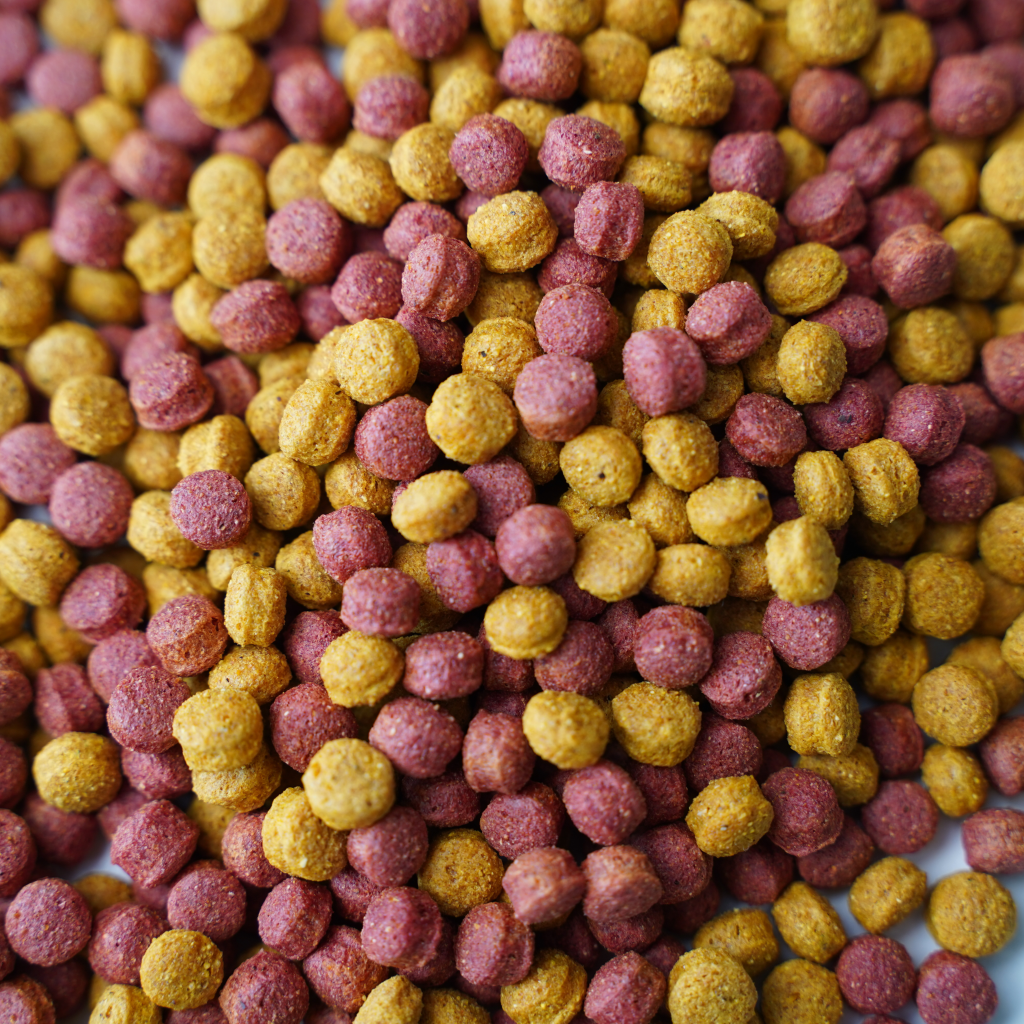
In the case of advanced pellet systems now entering the market, formulation philosophy has shifted further: incorporating multiple real plant components — fruits, vegetables, berries, herbs — into a single extruded matrix. Some formulations now contain 30+ ingredients, including up to seven fruits, four vegetables and four berries per pellet. The objective is diversity without selectivity.
Importantly, modern pellets are not positioned as exclusive diets in isolation. Many producers recommend pellets as a 70–80 percent nutritional base, complemented with fresh vegetables and other appropriate enrichments. This approach mirrors contemporary canine feeding models: structured nutrition supported by fresh diversity.
Extrusion, digestibility and safety
Extrusion is often misunderstood in avian nutrition. Properly executed, it offers two critical advantages: digestibility and microbiological safety. During extrusion, starches are gelatinised and proteins denatured in a controlled environment. This pre-processing enhances digestibility in the crop and intestinal tract. The comparison is straightforward: humans cook food for the same reason — nutrient accessibility improves.
High-temperature extrusion also reduces microbial risks. Salmonella, mould spores and potential aflatoxin exposure are mitigated under controlled thermal conditions. While low-temperature extrusion is sometimes marketed as ‘gentler,’ insufficient thermal treatment may compromise safety. In practice, balanced extrusion requires careful vitamin overage strategy. Heat-sensitive nutrients must be accounted for during formulation to ensure final bioavailability.
Functional components such as mannan-oligosaccharides (MOS), fructo-oligosaccharides (FOS) and Bacillus velezensis DSM 15544 are increasingly incorporated into pelleted systems to support gut stability and microbiome balance. While such approaches are well established in livestock and companion animal nutrition, their integration into avian feeding continues to expand.
Protein: More is not better
One of the most common misconceptions in avian nutrition is that higher protein equals better performance.
In reality, most companion parrots thrive on moderate protein levels. Maintenance pellet formulas with crude protein levels around 11–12 percent, combined with approximately six to seven percent fat, reflect a metabolic balance closer to natural feeding ecology than high-protein poultry-based logic. Parrots are not chickens. Excessive protein can stress renal and hepatic systems, particularly in long-lived species. Unlike production poultry, companion parrots are expected to live decades — nutritional strategy must prioritise longevity, not growth acceleration.
Plant-based protein systems are increasingly favoured within extrusion for stability and formulation clarity. Animal proteins may play a role in supplementary feeding (e.g., egg foods or soft pates), but many pellet systems deliberately separate extrusion from animal protein inclusion to maintain manufacturing hygiene and formulation consistency.

Species considerations without fragmentation
The avian category presents a challenge not faced in dog or cat nutrition: species diversity. From macaws to cockatoos, African greys to lorikeets, metabolic nuances vary. African greys, for example, require careful calcium management, while cockatoos may be more sensitive to elevated fat levels and sugar intake. Larger macaws tolerate slightly different energy densities, while nectar specialists require different fibre structure.
While fully species-specific pellet systems are commercially complex, balanced universal formulas supported by fresh dietary additions provide flexibility. Modern pellet strategies often focus on universal balance, allowing keepers to customise via fresh supplementation.
Observed physiological impacts
Veterinary practitioners and breeders transitioning birds from seed-heavy diets to balanced pelleted systems frequently report improvements in feather quality, more stable body composition without obesity and more consistent droppings indicative of improved digestibility. Breeding operations have also noted improvements in fertility and chick survival, as have selective feeding gone down under structured feeding regimes.
Acceptance remains a common concern. However, structured transition protocols demonstrate high conversion success rates — often exceeding 80 percent with appropriate management. Behaviourally, pellets also extend feeding time and foraging engagement compared to rapid seed consumption. The result is not merely nutritional correction but environmental enrichment.
Addressing common objections
Resistance to pelleted feeding often centres on three perceptions: that pellets are ‘unnatural,’ nutritionally inadequate or uninteresting to birds. These views frequently reflect earlier generations of products that relied on limited ingredient diversity, artificial colouring or added sugars to drive palatability.
The current trajectory of advanced pellet formulation differs significantly:
- Real fruit and vegetable inclusion instead of added sugars
- Natural pigments derived from herbs and vegetables.
- Avoidance of artificial preservatives in favour of tocopherols
- Controlled fibre targets (currently around 3% and increasing in some systems)
- Ca:P ratios around 1.5:1 to support long-term skeletal stability
Modern bird keepers — particularly younger demographics — are increasingly informed. As with dog and cat categories, demand for ingredient transparency is rising.
Industry implications
The global parrot population in captivity remains substantial, yet a significant proportion is still primarily seed-fed. Estimates suggest that pellet penetration remains far below potential. Retailers who dedicate the majority of shelf space to seed mixes may be overlooking both nutritional progress and premium positioning opportunities.
The broader pet sector has already demonstrated that consumers are willing to invest in scientifically structured diets for longevity and wellness. Avian nutrition is not behind the times — it is specialised. However, large generalist pet brands entering the category frequently misapply poultry feeding models. Mineral profiles and nutrient strategies designed for broilers cannot simply be transferred to long-lived exotic species.
Parrot nutrition demands its own science. Companies that approach the category with respect for its biological complexity — and with collaboration across breeders, veterinarians and manufacturers — are better positioned for sustainable growth.
A maturing category
The evolution of complete pelleted diets for parrots mirrors trends seen in other animal sectors: movement away from caloric abundance toward nutritional precision.
The future of avian feeding is unlikely to eliminate fresh foods, nor should it. Instead, structured pelleted foundations supported by diversity represent a balanced path forward.
As the category matures, the opportunity lies not in replacing tradition abruptly, but in refining it through science. Parrots may have adapted to seeds. But adaptation is not optimisation. The industry now has the tools to do better.