by Niamh Cassidy, Editorial Manager, International Petfood Magazine, UK
Sustainability is an important challenge producers face in petfood processing. According to research studies, the global petfood industry accounts for between 1.1 percent to 2.9 percent of global agricultural greenhouse gas (GHG) emissions.
We’re in a worrying era of climate change and increasing global warming. Across all industries, lowering our carbon footprint is paramount for securing our future.
Countries that have signed the Paris agreement – a legally binding international treaty on climate change, with a commitment to keep global warming below 2°C (1.5°C if at all possible)- have been advised by the International Panel on Climate Change (IPCC) to reduce Greenhouse Gas (GHG) emissions by 40-60 percent between 2010 and 2030 and then further to 100 percent by 2050, to reach net zero. But how can the petfood industry reach these targets?
Of course, as many of International Petfood’s articles show, a vital component is the responsible sourcing of feed, and utilising novel feed ingredients and alternative proteins, among many other topics – but a key aspect we’re going to discuss here is energy.
Energy usage
The start of any production begins with energy, and how much you use has a monumental impact on the overall carbon footprint. A key component of petfood production that uses significant amounts of energy is the processing.
The production of one tonne of compound feed requires approximately 40 to 60 kWh/t of energy – and the biggest process in that is pelleting, which requires up to 25 kWh/t (Redecker and Thoben, 2012).
After you have your raw materials and store them, the process of petfood processing begins with grinding and mixing, extrusion and pelleting, drying and cooling, and coating. All these processes require specific equipment, with different energy usages.
For example, mixing consumes a moderate amount of energy, typically between 0.8 and 5.5 kWh per mix (this depends on the type of mixer and mixing parameters), whereas the drying and cooling of petfood can require between 250 to 380 kWh of thermal and electrical energy per one metric tonne.
All the different stages of feed processing process are essential, (e.g. grinding, and particle size reduction is essential for pelletising, because it allows for the creation of homogenous mixing and influences pellet quality greatly) so increasing energy efficiency is key.
How much energy does your equipment use?
At the Petfood and Aquafeed extrusion conference this year, during VIV Asia 2025 in Bangkok, Thailand, the organiser, Dr Mian Riaz, from Texas A&M University, gave a very interesting presentation on the topic of reducing energy cost and carbon footprint in aquafeed and petfood production. You can see more on this conference in our previous issue of International Petfood Magazine (April 2025 edition).
The presentation covered the need to reduce energy costs and carbon footprint, whilst increasing efficiency in processing technologies.
The starting point for producers is to look at how much energy the equipment was using, and how that can be improved.
Dr Riaz emphasised the important of investing in the right equipment, saying “modern extruders are designed to minimise energy whilst maximising efficiency and product quality.”
“Implement advanced grinding and milling technologies that reduce energy consumption. High efficiency equipment lowers the energy required to achieve the desired particle size and homogeneity.” he continues.
Other tips he mentioned included circle grinding, a method that ensures only the particles that need to be ground are sent through, and fine materials are directly sent through the bypass.
Know your energy input
The topic of mechanical vs thermal energy was also bought up during this presentation, and how in petfood manufacturing, you should determine what is more efficient/costly.
To determine energy consumption here, parameters that can be used to calculate include Specific Mechanical Energy (SME) and Specific Thermal Energy (STE).
SME represents the level of energy transfer from the main drive motor to the compounding process measured by mass of material (also corresponds to electrical electricity). STE represents the energy transfer from heat sources (via steam injection) to the material, related to the amount of head added via steam. These indicators are helpful to maintain control of critical processing parameters and evaluate what type of energy is most efficient. Determining with SME and STE which energy is most efficient for the situation is helpful.
How to we measure our progress?
In a whitepaper by Buhler, called ‘The business case for sustainability in the petfood industry’, the use of the Science Based Targets initiative (SBTi), greenhouse gas (GHG) accounting and life cycle assessments (LCAs), are referred to, as a way for companies to quantify their environmental sustainability in the petfood value chain, and indicate how to reduce your overall carbon footprint.
Reducing scope 1, 2 & 3 emissions in petfood manufacturing is key, and with regard to energy, Buhler suggest things such as prioritising the reuse of waste heat from the manufacturing process (i.e. drying and grinding), to become a primary source of building hearing or processing energy. They also suggest after the drying process, to recover wase heat and upgrade with retrofit heat pumps to reduce energy use. According to Buhler, emissions can be reduced up to 45 percent with thermal energy savings of up to 30 percent with this method.
Buhler also emphasise the need to use energy efficient machinery like modern hammermills to reduce scope 2 emissions, as well as the use of smart sensors to avoid energy spikes, minimise machine idling times and maintain equipment.
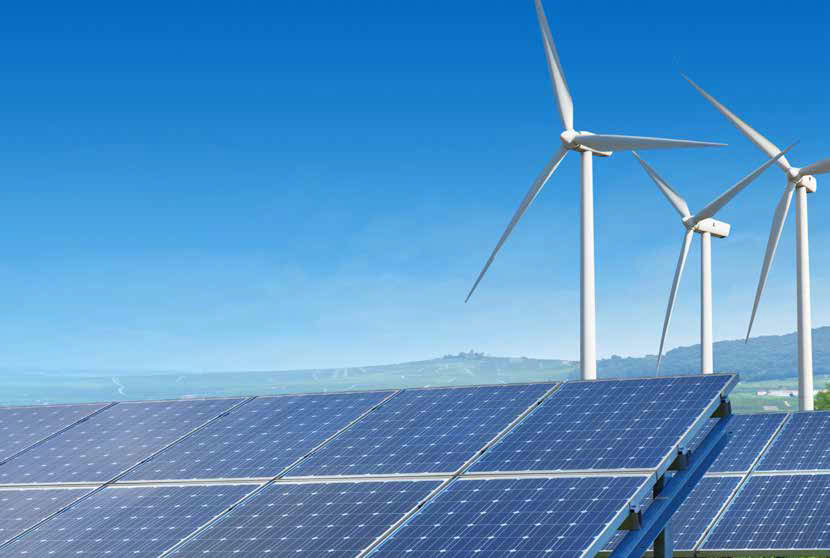
Lastly, the use of renewable energy is mentioned, with key steps they recommend being to produce renewable energy on site (i.e. solar panels), buy renewable energy certificates, and develop a power purchase agreement.
The future of energy efficiency in petfood
It’s worth mentioning where we get our energy from is very important. Renewable energy sources that the petfood processing industry could utilise include solar power, wind power, biomass, geothermal energy, and hydropower. Investing in renewable energy is a crucial strategy for reducing carbon footprint, lowering GHG emissions and minimising environmental impact.
However, if we focus on petfood production itself, we can see it’s also vital to look at our current energy consumption, input, and efficiency with the current and new equipment out there. This will go a long was to helping move towards a more sustainable future.
Published in the May 2025 issue of International Petfood