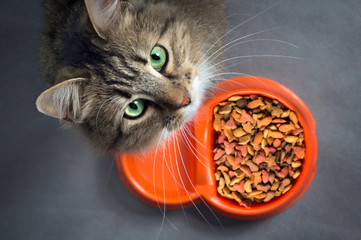
The global pet care market is undergoing a notable transformation as rising “feline favouritism” reshapes consumer spending patterns and positions cat food as a primary growth driver. A market that is expected to reach USD 207 billion in 2025 is being redefined by changing pet demographics, unpredictable economic conditions, and changing owner preferences, according to Euromonitor International.
Cat food has been the fastest-growing category, with a 6% CAGR between 2020 and 2025, according to new data from Euromonitor International’s World Market for Pet Care 2025 research. Dog food, on the other hand, had a slower CAGR of 3.8% during the same time frame. Cat food is predicted to expand at a 4% CAGR through 2030, indicating that the momentum behind cat ownership—driven by decreased care requirements and general affordability—will continue.
The growing strain on consumer budgets was emphasised by Sahiba Puri, Global Insight Manager for Pet Care at Euromonitor International “Economic uncertainties are a growing headwind for the pet care industry. Despite the industry’s relative resilience exhibited in the past, consumer patience is wearing thin as continuing pricing pressures is stretching consumer wallets.”
Traditionally dog-dominated areas like Western Europe and North America, as well as emerging economies like Asia Pacific, are seeing an increase in cat ownership. Rising large dog ownership costs, more stringent laws, and cultural inclinations that favour cats, especially in some Asian countries, are the main causes of this change.
Dogs are expected to account for 66% of all pet food sales worldwide by 2030, notwithstanding the rise in cat ownership. But the dog population as a whole is changing. Large dog ownership in North America is predicted to decrease from 32% in 2020 to 27% in 2030, while small dog ownership will increase from 42% to 46% in the same time frame.
Dog food will continue to be the main source of income even though there are more cats than dogs in some areas. Dog food is predicted to account for 68% of total dog and cat food value sales in North America by 2030, preserving the dog-centric market status of the area. Dog food will make up 45% of the category’s value in Western Europe.
This discrepancy emphasises the necessity of precise market tactics, from value-driven cat nutrition targeted at cost-conscious owners to preventative, science-led dog food formulations.
Even though there are more cats than dogs in some places, dog food will still be the primary source of revenue. By 2030, dog food is expected to make up 68% of all dog and cat food value sales in North America, maintaining the region’s dog-centric market position. In Western Europe, dog food will account for 45% of the category’s value.
This disparity highlights the need for specific marketing strategies, from preventative, science-driven dog food formulas to value-driven cat nutrition aimed at budget-conscious parents.