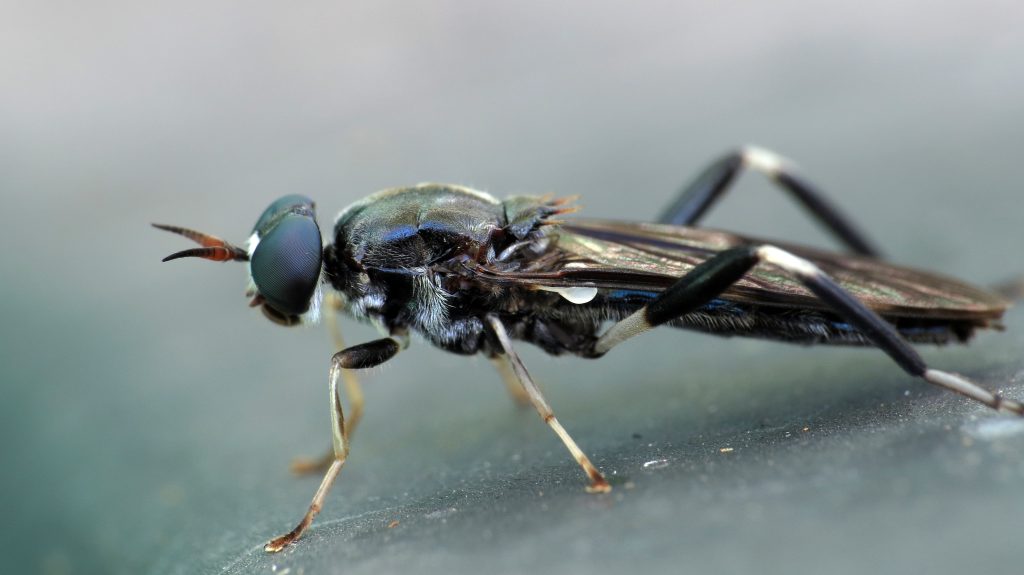
Reports are showing a shift in petfood purchases as the economy seems to have finally caught up and the dollar spending on petfoods is leveling as customers look at value for cost. An article in this issue on Entomeal and their insect meal reports good acceptance and results. These two topics might go together but having not looked into costs of insect meal versus the standard type of protein sources this needs to be evaluated. Following the idea of four areas of extrusion, raw materials, system configuration, running conditions and final product specifications it might be interesting to discuss if the system or running conditions with insect meal added will change the final specs of the product.
From the article mentioned above it shows testing at 5, 10, and 20 percent inclusion levels for pets. Acceptability and consumption levels looked good. Ok, have to assume somebody made the test feed without issues. However, I like to play with the numbers to see the effect from a production point of view. For discussions, let’s assume the insect meal is dried to a similar level as poultry meal, fish meal and other proteins of animal origin about 10 percent.
Considerations in extrusion for production besides the nutritional aspects is moisture level, fat or lipid level and starch levels as these can affect the process. What is the limiting factor? It is doubtful that the formula will be short on starch. With fresh meats the first limiting factor in standard style extrusion cookers is the moisture level. There are some exceptions where machines can use higher levels of meats, but for this review let’s consider mainly single and twin screws where mechanical energy is the driving force to cook the food. These machines, when equipped with enough conditioning cylinders and or designs that allow high levels of high moisture ingredients should yield a free-flowing material to the extruder barrel. If not consistent then this becomes a limiting factor. Single screw extruders can handle about 20 percent of 65 percent moisture meat while twin screws can handle about 25 percent. This is equivalent to adding about 10 and 16 percent moisture respectively. If the other ingredients have approx. 10 percent moisture and some is added in the process via water and steam, we are near the moisture limit for these kinds of machines and products from them. The second consideration is lipid or fat levels in the feed before extrusion. For little or no effect in the density the limit is about 15 percent fat total and above this the product has lower expansion or heavier density. At 20 and 25 percent inclusion levels the lipids associated with these kinds of meat at 12 percent lipid in the meat is a 2.4 to three percent lipid addition so generally no negative effects for the extrusion process. This review sets a general base line of what is in the industry for comparison.
Now looking at insect meal what needs to change if anything if insect meal replaces some or all of the normal protein sources. Looking up some details on the internet it appears that black soldier fly meal has general specs of 50% protein, 9% to 15% fat and 10% moisture. Mealworm is seen to have 50 to 60% protein and 20 to 30% lipid dry matter. Looking at this lipid level at a 25% inclusion it would be adding 7.5% fat. Depending on the rest of the total fat level this might become limiting or the need to deal with density adjustments. For reference chicken meal dried to 10% moisture has 65% protein and 12% fat. Regular chicken meat is 70% water, 18% protein and 5% fat. There are many options and at the levels it now appears to be used with insect meals there should be no situations with regards to production.
Mentioning possibilities of higher-level inclusions of meats, some systems can now approach nearly 75 to 80% meat inclusion at 65% moisture levels. The success in these is based on handling the moisture and getting the cook needed in petfood production. This requires increases in thermal energy usage in addition to the mechanical energy as well as special handling of these wet nuggets post the extruder die. Logic, at least in my case, it seems that using fresh higher moisture ingredients especially with the ingredients that yield palatability results are the land animal meat inclusions. Using these fresh ingredients in conjunction with the dried meals yield super premium products. These fresh products are not dried so how much energy is saved in the process to dry, rewet, process and redry? Nutrient losses? Costs of raw wet ingredients would be higher no doubt but manageable as seen in the industry.
Now will we see a time where the insect meal uses and availability is such that perhaps a liquified form much like the ground smooth meats used in petfoods will be available? It would be something of interest in my opinion as having seen the ease of operation or production when liquified ingredients are pumped and metered into the process. The modern petfood plant with computer controls, loss in weight dry feed systems and accuracy of pumps and the quality of flow meters make adding high moisture ingredients in place of water quite simple. Meats need to be kept chilled and or frozen, thawed, checked for metals, ground, moisture adjusted and then pumped into the system. Do insect products need the same at higher moistures? Are stabilization products out there? Will this possibly eliminate the need for the expensive meat handling systems? Most likely it will not change but a similar duplicate system for handling insect ingredients might be in order. Not having a chance to discuss insect meal storage in vertical bins and its flow characteristics at this point we need to assume it is OK, but you never know. At the above referenced lipid level of mealworm meal it should be noted most issues in bins are associated with hydroscopic ingredients or ingredients with elevated lipid levels which require “max time in bin management” as well as special discharge devices, live or vibratory.
The industry is in motion and advancing in a number of different ways involving ingredients, machinery designs, novel new processes and advancements in existing systems. All developing to improve the process of petfood production at reasonable cost and for good value to the customers.
This Editorial was published in the June edition of International Petfood Magazine.