by Laura Latišonoka, Tetra Recart Product Management Director, Tetra Pak, Sweden

As we look back on 2024, the petfood industry has experienced some dynamic changes driven both by consumer demands and various industry pressures. We’ve seen changes across investments in production, waves of new product launch, shifts in legislation and the acceleration of e-commerce.
As pet owners increasingly prioritise their pet’s health and wellbeing, understanding how packaging can protect the functionality and nutritional value of petfood becomes more important. Meanwhile, the drive for more convenient petfood options, whilst still delivering value in terms of quantity and quality has meant a trend towards smaller size packaging.
Like most sectors, sustainability remains one of the main drivers of consumer behaviour. As the petfood packaging sector continues to evolve, embracing new materials and technologies to meet the need of environmentally aware consumers will be critical to retain brand loyalty.
I believe that we can drive the best value when packaging suppliers work closely with petfood producers, brands and retailers, fostering a strategic partnership to help them understand and navigate the dynamic trends that are driving consumer purchasing decisions, and meet an increasingly demanding legal landscape. Let’s do a deep dive into the trends and how packaging can help facilitate these changes.
The wellness wave
For many pet owners, their pets are part of the family. They refer to them as their ‘children’ and therefore want to provide them with the most high-quality meals they can afford. This has led to a preference for natural, high protein and additive free food options – something that pet owners often see as a priority, rather than a luxury.
One of the markets where this trend is strongly increasing is China, where the prioritisation of wellness in pet care products is driven by a growing awareness of pet health and increasing disposable income, particularly amongst the younger demographic. An example of this is one of our customers in China, NatureBridge Vet, whose products have specifically formulated nutrition and are aimed for special dietary care, like gastrointestinal tract, urinary tract and kidney support.
The wellness wave is a broad concept with consumers focussing on nutritional balance and physical health. But natural appears to be a priority. Parallel to the trend for natural health is a desire for more medically positioned food, targeting very specific health needs. These petfood products often contain distinct ingredients, and so the packaging plays an important role to not only protect what’s inside, but also ensure features and nutritional claims can be properly explained. This requires sufficient design space on the package. However, for some medical focused petfoods, smaller packaging sizes might be a better fit to help control portions, where sizes below 100g are becoming more common in the market.
Pursuit of value
The cost-of-living crisis has meant consumers are reassessing their spending habits and petfood manufacturers need to find ways to support this change. This rising cost burden has meant consumers are looking to find a balance between affordability, while maintaining product quality, resulting in a drive towards seeking out multipack and bulk buys as well as discounts offers.
Petfood manufacturers must consider the full value chain when making their choice of packaging, from product production, packaging and distribution. Choosing a smart packaging format that provides cost benefits across all the different elements in the petfood chain, might offer a better price to the consumer.
Elsewhere, having the option of multiple formats, whether that’s multipack or single serving, gives producers the flexibility in developing different value concepts. Multi variety packs for example, gives consumers more choice and option to diversify pet meals. Meanwhile, bulk buying provides a time saving solution, particularly when bought online where cost saving and convenience in distribution are critical.
However, something that has become clear and we anticipate will continue to be a driving trend in 2025, is that the concept of ‘value’ is evolving to go beyond price point. Consumers sensitive to cost are demanding tasty and healthy petfood that’s ‘worth the price’. Today’s pet owners are seeking greater value in the products they purchase, which means packaging must deliver on multiple fronts: sustainability, convenience, quality, and innovation.
Relevance of sustainability
Consumers’ eco-awareness and desire to limit the impact on the planet is clear to see, and this is true for across the value chain. From the sourcing of ingredients to the environmental footprint of the production processes and sustainable packaging, consumers, particularly in Europe and the Americas, are more aware of a wide range of eco issues and often wish to apply these principles to their purchases.
A Mintel report from 2023 clearly showed the increasing emphasis consumers place on different elements of sustainable packaging, for example ‘recycling’ and ‘carbon neutral’. Whilst sustainable packaging for petfood is still a relatively new concept; many brands are working towards this goal and considering more use of paper packaging.
Our Tetra Recart® team are committed to developing solutions that are not only effective but sustainable. Our package consists of renewable raw materials and features a carbon footprint up to 72 percent CO2 lower footprint than cans. In fact, their lifetime carbon emissions are 85 percent lower than those of steel cans, and 83 percent lower than glass jars (LCA report, 2020, European market).
Furthermore, at least 71 percent (Carton CO2 Calculator certified by the Carbon Trust) of the material in a Tetra Recart® carton package comes from a renewable responsibly managed resource – trees. Trees absorb carbon from the atmosphere turning it into wood and releasing oxygen, providing us with air to breathe. Today’s consumers are increasingly demanding food packaging that has less impact on the planet.
Driven by convenience
Consumers are looking for ways to streamline their pet care routines, by minimising shopping and optimising serving of pet meals. This ranges from buying ready portioned meals to convenient shopping options like kerbside pickup, or subscriptions boxes. This is why a lot of manufacturers are moving to an online distribution channel and adding new features to accommodate e-commerce services.
Convenience is also considered when serving and storing petfood. This could be with ready-portioned meals that make feeding time simpler, where the Tetra Recart® 100 Mini offers a smaller packaging option that is easy to open, serve, and dispose. Some look for larger re-closable packs which can be divided into multiple servings over more than one day.
A survey by Euromonitor highlighted changes in pet care’s channel distribution over the years, with the sharp rise of retail e-commerce. This rise in online shopping and the growing trend of subscription-based purchasing have also amplified the need for packaging to be eye catching. Standing out on the digital shelf and having robust and efficient square packages that stack and travel well, and don’t break, can make a huge difference.
Looking into the future
Ultimately, these trends of wellness, value, sustainability and convenience will continue to dominate in 2025 and beyond. We will continue to see the need for petfood to support healthy lifestyles and this will expand to addressing specific dietary needs of the animal. The pursuit of value and finding quality at the right price means looking for discounts, multi variety packs and bulk buy offers and the need for sustainable products will remain one of the main purchasing drivers.
Picking the right packaging solution not only plays a critical role in food safety but helps petfood producers address these consumer trends. A paper-based package offers petfood brands a convenient, easy to distribute and time-saving solution for consumers managing busy lifestyles and are driven by the pursuit of value and flexibility. Whether it’s through variety packs, bulk buy offers or having the convenience of multiple servings, a package like Tetra Recart® can meet multiple demands.
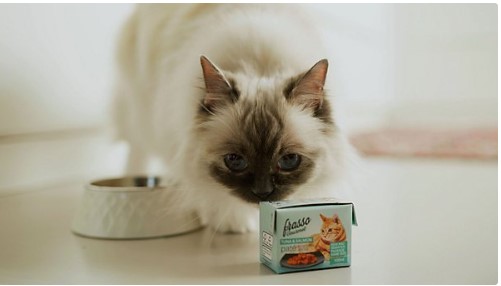
Elsewhere the large amount of space on the package gives brands the opportunity to include more nutritional information for those seeking wellness-based products and attractive, attention-seeking graphics to help the product stand out on the digital or retail store shelf. Finally, for pet owners seeking a more sustainable solution in petfood, a paper-based carton can be a good option given its use of renewable material and ability to be transported more efficiently because of its rectangular and light weight shape.
By staying attuned to these trends, we strive to help petfood brands not only meet consumer expectations but also stand out in a competitive market and retain brand loyalty. With a collaborative mindset and commitment to innovation, we can deliver the solutions that meet needs of consumers today.
Published in the January 2025 issue of International Petfood.