

















by Francesca Susca, Global Category Manager for Pet, Lallemand Animal Nutrition, Italy
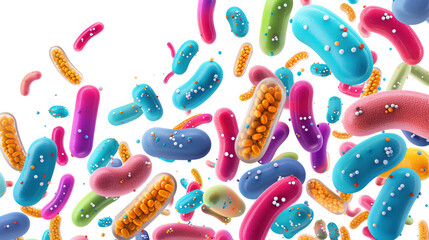
Every person and animal hosts a vast internal ecosystem – trillions of microorganisms collectively known as the gut microbiome. This living network, made up of bacteria, fungi, viruses and other microbes, plays essential roles in digestion, nutrient synthesis, immune modulation and even mood regulation. This microbial ecosystem responds dynamically to dietary inputs, making nutritional interventions a practical approach to supporting gut health in companion animals. If a balanced gut microbiome helps keep us healthy, it is important to remember that what we (and our pets) eat impacts the ability of our microbiome to do its job.
Feeding the ‘good guys’
Nutritionists recommend a high-fibre diet for many reasons, but for the microbiome the crucial one is the introduction of prebiotics. Prebiotics nourish beneficial gut bacteria, helping them thrive and in turn, these microbes support overall health from within.
Another aspect of our gut microbiome is the balance of ‘good’ and ‘bad’ bacteria. This balance can be disrupted by factors such as dietary changes, infections, antibiotics or a weakened immune system. When it becomes disturbed, the result may include diarrhoea (acute or chronic), vomiting or loss of appetite, which can impair digestion and reduce nutrient absorption.
Probiotics are live microorganisms, either yeast or bacteria, that help restore a healthy gut microbiota and support digestive function. Beyond this, they offer complex benefits, including immune modulation, competitive exclusion and facilitating host-microbiome interactions – often called ‘cross-talk’ that help strengthen the intestinal barrier.
The rise of postbiotics
Postbiotics have become one of the most talked-about biotics in recent years – and for good reason. In a fast-evolving industry like pet nutrition, where innovation and differentiation are essential, postbiotics present a unique opportunity to deliver both.
The International Scientific Association of Prebiotics and Probiotics (ISAPP) formally defined these compounds only a few years ago as preparations containing inanimate microorganisms and/or their components that provide a health benefit to the host. Similar to probiotics, postbiotics can originate from either bacteria or yeast.
In recent years, researchers at Lallemand Animal Nutrition have focused on three selected postbiotic bacterial strains—Lactobacillus helveticus HA-122, L. paracasei HA-108 and L. plantarum HA-119, produced through strain-specific gentle heat treatment. This process inactivates the microorganisms while preserving their structure, maintaining the integrity of bacterial membranes and key bioactive compounds to ensure functionality.
While all three strains underwent this careful preparation, the following studies zoom in on L. helveticus HA-122 and L. plantarum HA-119 to demonstrate the postbiotic approach in-depth.
Building on this, a dedicated research program was launched to move from strain characterisation to proof of concept. The first objective was to confirm that inactivated cells could still deliver the functional benefits of these postbiotic strains, particularly in supporting immune response and strengthening gut barrier integrity.
Zebrafish: Small model, big insights
To evaluate postbiotics’ mode of action, researchers first turned to the zebrafish—a well-recognised model for studying mammalian gut and immune biology. Despite being a small freshwater species, zebrafish share significant genetic and physiological similarities with mammals, especially in immune and digestive function. They also offer ethical and logistical advantages: rapid breeding, transparent embryos for easy observation and low maintenance.
In controlled trials, zebrafish were fed diets containing either live or heat-treated L. helveticus HA-122 or L. plantarum HA-119. Over several weeks, those receiving live and heat-treated bacteria demonstrated enhanced gut barrier integrity and stronger immune responses compared with controls. In viral challenge tests, fish supplemented with heat-treated L. plantarum showed increased immune gene expression and higher survival rates, clear indicators of improved clear indicator of greater resilience.
Fish tank to pet bowl
Lallemand’s researchers, encouraged by these results, extended the postbiotic evaluation to companion animals by performing in-vitro and in-vivo studies.
A first in-vitro study evaluated the effect of L. helveticus HA-122 supplementation on antibiotic-induced dysbiosis using Canine Mucosal Artificial colon model. The results showed that the heat-treated L. helveticus HA-122 accelerated the re-establishment of microbial balance compared with controls.
The second in-vivo study involved 40 healthy adult dogs and examined another common digestive stressor: dietary transitions. Whether upgrading nutrition or managing sensitivities, food changes can challenge gut stability. Dogs received either their standard diet or the same food supplemented with the postbiotic. All dogs then transitioned to a high-protein formula to assess digestive adaptation.
The results demonstrated consistent benefits compared to control animals:
- Improved digestive function: Stool quality normalised more rapidly in supplemented dogs, indicating quicker resolution of dietary stress.
- Enhanced gut barrier support: Measurements of faecal calprotectin and secretory IgA revealed beneficial trends, suggesting the postbiotic helped reinforce intestinal defences during periods of stress.
- Better tolerance of dietary changes: During food transitions, dogs receiving supplementation demonstrated smoother adaptation and more stable faecal consistency.
- Improved skin and coat health: Dogs showed measurable enhancements in skin condition and in microbiota composition and diversity, supporting the gut–skin axis hypothesis.
Implications for pet well-being
For the petfood and veterinary nutrition sectors, postbiotics represent an emerging microbiome support, following prebiotics and probiotics. From a formulation perspective, postbiotics are shelf-stable, heat-stable and compatible with extrusion and other manufacturing processes used in the petfood industry. This makes them practical and reliable for use in both dry and wet petfood, as well as supplements.
Integrating postbiotics responsibly
For researchers: Widely recognised in mammalian research, the zebrafish model is a valuable tool for preliminary screening of new candidate strains and for exploring mechanisms of action, as well as identifying biomarkers of interest. However, species-specific validation remains essential to confirm proven benefits.
For formulators: Consider postbiotics when targeting immune support or digestive resilience in premium products. Their shelf stability eliminates cold chain requirements, simplifying manufacturing and distribution logistics.
For practitioners: When recommending postbiotic supplementation, focus on specific applications – post-antibiotic recovery, dietary transitions or immune support – rather than general health-standing claims. Strain-specific effects matter; not all inactivated bacteria provide equivalent benefits.
Future of gut health
Postbiotic bacteria provide a science-backed solution for maintaining the delicate microbial balance that supports pet health. Their benefits go beyond gut barrier integrity, extending well beyond the digestive tract. Research increasingly shows that the gastrointestinal system influences overall health through its connections with other organs – known as gut-organ axes. These include the well-studied gut-brain axis and emerging links such as gut-skin, gut-liver and gut-immune axes. These pathways highlight the systemic impact of intestinal microbiota on neurological, skin and immune functions, positioning postbiotics as a cornerstone of next-generation nutrition.