by Andrew Tindall, Patent Attorney, Potter Clarkson, UK
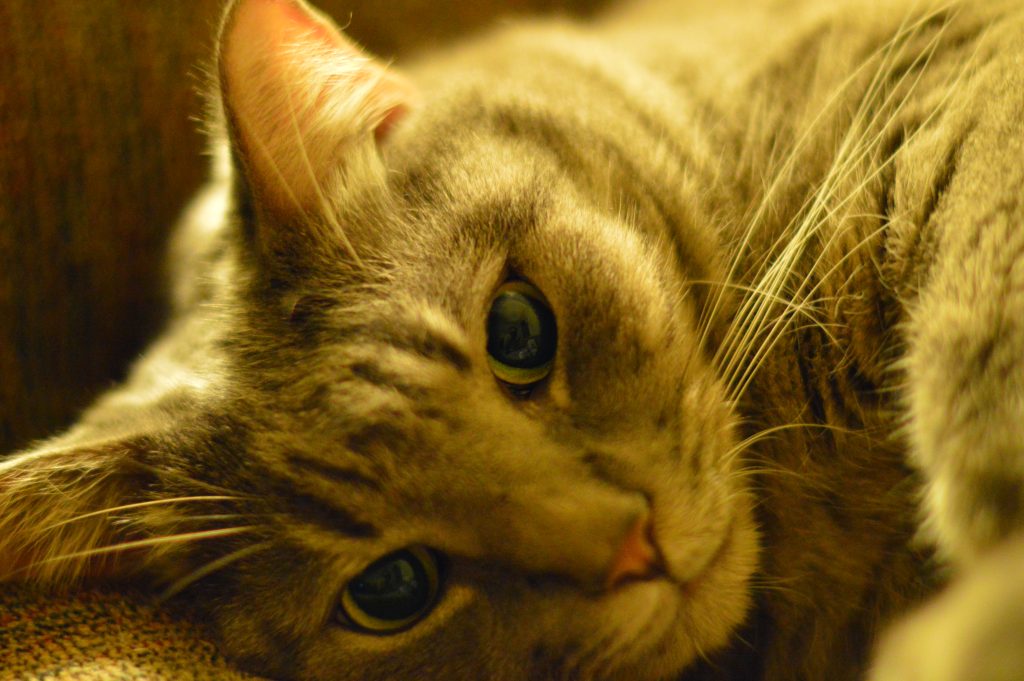
I had a rather rude awakening recently at the vet’s office. When taking my cat for her annual jabs, I was told that we needed to talk about her ‘condition.’ This, of course, is the polite way of saying that my cat was, well, fat. Whilst embarrassing, this is not uncommon, as half of dogs and over a third of cats are reportedly overweight or obese. Nevertheless, I walked away with a sense of shame, and a prescription for a new, high-protein diet for the family moggy.
Sticking to this recommendation comes with its own challenges, however. Like many households, mine tries to limit the amount of meat we consume for environmental reasons, and I started thinking about how the changes in my cat’s diet would affect our carbon footprint. I’m not alone in this problem. With over 49 percent of adults in the UK owning a pet, the environmental impact of all those sachets of meaty chunks in gravy is staggering. Indeed, 22 percent of all meat produced is consumed by pets, and contrary to public belief relatively little of this is made from upcycling in-demand abattoir waste.
Navigating the environmental impact of pet nutrition
As high protein diets are required for the health of our pets, there remains an unmet need to provide environmentally friendly feeds to satisfy the protein demand, simultaneously improving the health of both companion animals and the plant.
One solution that has already emerged is the use of insect-based protein and the black soldier fly larvae (BSFL). Their capacity to convert organic waste into high protein feed is impressive and has been harnessed by reptile and poultry keepers for decades. When dried, BSFL contain up to 50 percent high-quality protein, and uses 80 percent less land than beef per kilo of protein. Insect protein remains an attractive option for pet feed, and I was surprised to see multiple brands harnessing this technology on the shelves of my local shop, with both Yora and Lovebug appearing to fit the profile recommended by my vet.
One challenge for insect proteins is the source of waste. Whilst BSFL will happily eat almost any organic substrate, including slaughterhouse waste, manure, and kitchen scraps, these can spread disease. Current regulations restrict insect feedstocks to pre-consumer, non-meat, waste. Whilst this is still a significant waste stream, it limits scalability, as profitability depends on access to cheap and plentiful substrate. Additionally, at present, the law effectively means that flies must eat food that could otherwise feed hungry people (or, indeed, their pets). Moreover, even a small risk of contamination might hinder acceptance in a sector where public perceptions of food safety are already poor.
Even if these challenges can be overcome, the question remains – will the public at large feel comfortable with their pets eating bugs? Given my cat’s fondness for hunting spiders, moths, and beetles, I suspect she will be unbothered either way. However, many pet owners won’t share her enthusiasm. Anecdotally, many owners feel uncomfortable feeding their pets foods they would not eat themselves, but additional processing to disguise the provenance of insect feed is in tension with recent moves away from ‘ultra processed foods’.
Another emerging technology which might hold the key to healthier and more sustainable pet food is mycoprotein. Once again, this is not so much new as a repurposing, as mycoprotein will be familiar (especially to those of us in the UK) as the concept behind vegetarian staples like Quorn. By growing microscopic fungi on feedstocks such as maize starch, it is possible to upcycle cheap substrates into high nutritional value proteins.
Innovative protein sources for a healthier planet and pets
Mycoproteins are beginning to find use in petfoods. Pawsible Foods, a startup in Singapore, has launched their mycoprotein dog food in the city-state as well as India. Similarly, Finnish biotech eniferBio have developed their own mycoprotein powder, and attracted significant buzz with their successful EU€11 million series A funding round in April 2023. Their protein PEKILO is now approved in the EU for pet food and has a projected market launch in 2026.
Mycoproteins have an advantage in that they have a long history in the food industry, and regulatory systems for ensuring their safety are already established in most jurisdictions. Additionally, this is a business model that investors understand, and will therefore know whether their investment is likely to be safe, and what IP and business strategies are needed to protect their market exclusivity. Moreover, there is significant untapped innovation potential, as the number of investigated fungal species remains small. As this work expands, it will likely become increasingly easy to source desirable and improved mycoproteins, for countless applications.
Stepping beyond the current supermarket shelves, the technologies shaping the future of human food might also one day influence what our pets eat.
Cultivated meat – the process of growing animal cells in culture, without the need for slaughter – has been steadily growing over the last decade. Once the preserve of science fiction, the technology is now firmly rooted in reality, with regulatory approval being granted in the US and limited public tastings taking place throughout 2023. As the end result is identical to conventional meat, it neatly bypasses fears of UPFs whilst, by avoiding land-use and abattoir wastage, may even be greener too.
In the UK, cultivated meat could make its way onto our pets’ plates before ours. The first cultivated meat to hit the shelves in the UK may well be for cats, with UK company Meatly poised to launch their chicken product following investment by Pets At Home. Hot on their heels, Czech start up Bene Meat is poised to release their first cultivated product in 2024, this time for dogs. Meanwhile, if my cat fancies fish rather than fowl, Singapore’s Umami Bioworks have developed ‘Marina Cat’, a treat that incorporates cultivated ocean snapper.
This degree of interest may be because, technologically and economically speaking, pet food could be a more attractive initial product than meat for human consumption. As the buyers are not consumers, marketing based on environmental benefits may be more effective than it would with meat for human consumption, where the significant challenge of perfectly replicating taste and texture is more important. In addition to less fussy end-consumers, the regulatory framework around pet food is far less complex.
Once mature, cultivated meat has the potential to go further than nature ever could. Perhaps one day, through canny cell selection or gene editing, it will be possible to adjust the composition of food for different animals – for instance, to produce medicinal, probiotic, or more digestible foods without the need for downstream fortification of processing.
However, the technology remains some distance away, and the large number of innovators in both the animal and human markets means competition is likely to be stiff. Indeed, with multiple competing proprietary platforms covered by strong patent protection, cultivated meat may be the site of costly legal battles, and the risk of litigation may have a chilling effect unless a collaborative approach is developed. That said, it may be possible for innovators to forge these relationships and avoid stepping on any toes by limiting themselves to the domain of pet food.
Advances in pet food have the potential to enable real customer choice. For a long time, consumer preference in this sector was driven primarily by the interplay between price and perceived quality. New technologies could enable owners to make decisions about sustainability, enhanced nutrition, or ethical considerations like veganism. Whilst there remains some tension between new food technology and current trends towards ‘clean’ or ‘natural’ pet food, it remains to be seen whether an appetite for sustainability can be converted into market share.
Food is an emotive, and opinionated subject, where public acceptance is as important as it is fragile. Whilst pets themselves have little choice in the matter, their owners are nevertheless likely to be discerning customers and will require convincing before new protein sources can break through into the mainstream.
Fortunately, my cat isn’t that fussy. No matter what the future brings, I’m sure she’ll eat anything – indeed, that’s partly how we ended up in this situation in the first place.
This Feature was published in the June 2024 edition of International Petfood Magazine.