by Jim Galovski, Founder, CEO, and President of Guardian Pet Food Company, USA
Understanding the shadows: Ultra-processed petfood
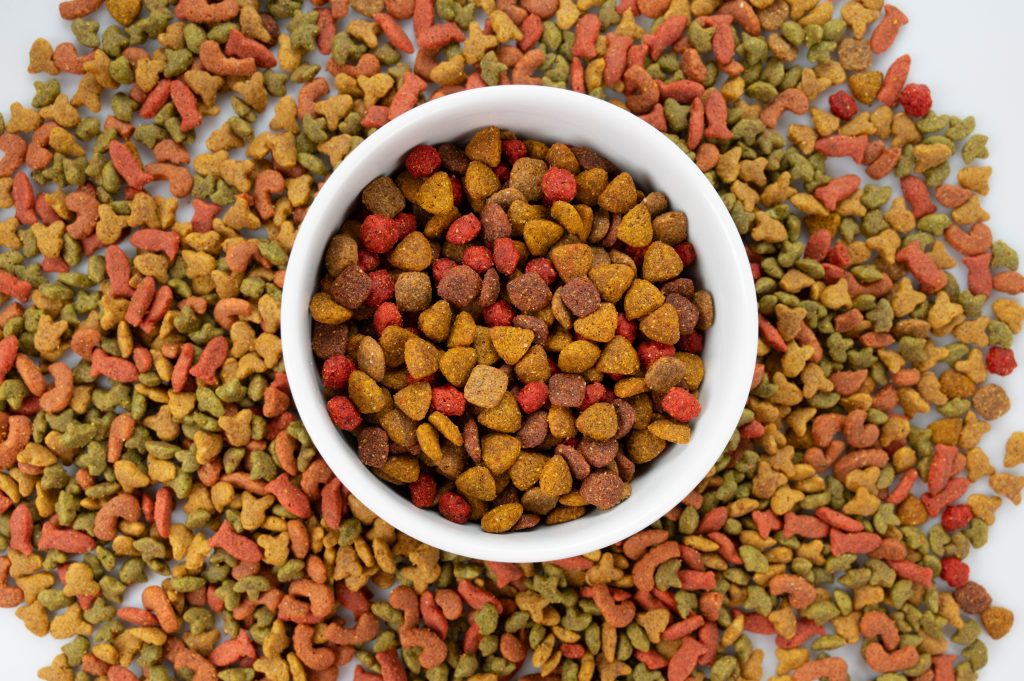
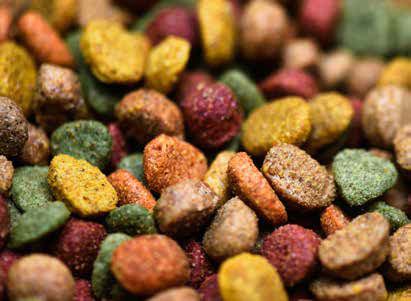
In 2023, 96 percent of pet owners across the world fed a ‘dry’ kibble and 95 percent of that kibble was extruded. This means that roughly 91 percent of all dogs are fed dry, extruded kibble. Extrusion has been the pet industry’s ‘go to’ process for almost 70 years now and has relied heavily on synthetics and artificial ingredients. So much so that the leading labs for testing petfood, up until a few years ago, didn’t even have assays to measure certain natural vitamins and minerals.
The extrusion process
- Mixing: Ingredients such as meats (frozen blocks, slurry ground and powdered), grains, vitamins and minerals (often premixes) are thoroughly blended to create a homogeneous blend.
- Conditioning: The mixture is pre-cooked and ‘conditioned’ with steam to soften and hydrate/hydrolyse the ingredients, making them more pliable for extrusion.
- Extrusion: The conditioned mixture is fed into an extruder (like a play-doh barbershop), where it is subjected to high temperature (220°F-400°F), pressure (between 100 and 500 psi) and shear forces of the extruder screws. This causes the mixture to expand and form a dough-like consistency.
- Shaping: The dough is forced through a die with specific shapes and sizes, forming the desired kibble shape.
- Drying: The shaped petfood is dried to reduce moisture content and improve shelf stability.
- Coating: Optional coatings or flavourings may be added before packaging the finished pet food for distribution.
An important requirement for extrusion is the need for carbohydrates/starches (up to 65 percent in some brands). Not only are carbohydrates a low-cost energy source but the starches are needed because they gelatinize and create the texture and structure of the kibble itself.
With high temperatures and high-pressure during extrusion, nutrients are denatured, and supplementation is required.
How it impacts the macros
Proteins undergo denaturation due to the high temperatures involved in extrusion, typically ranging from 220°F to 400°F. This can alter the structure of proteins, affecting their digestibility and bioavailability.
Carbohydrates are also subject to denaturation during extrusion, particularly starches. High temperatures can cause the gelatinization of starches, which can improve their digestibility. However, excessive heat and pressure leads to the formation (Maillard Reaction) of undesirable Advanced Glycation End Products (AGEs) like acrylamide (a known carcinogen).
Vitamins, particularly heat-sensitive ones like vitamin C and certain B vitamins, can be partially denatured or degraded during extrusion due to the high temperatures involved. Manufacturers often add vitamin premixes to compensate for potential nutrient losses. Some vitamins can experience up to 90 percent loss during the extrusion process. Even when isolated and applied after extrusion, some vitamins (like Vitamin A) can lose up to 30 percent of their potency per month, just while sitting in the packaging.
Minerals are generally more stable to heat compared to vitamins and proteins. However, certain forms of minerals may be less bioavailable after extrusion due to interactions with other components in the food mix.
Fats can experience lipid oxidation, which may affect the stability and nutritional quality of fats in petfoods. Antioxidants are often added to mitigate lipid oxidation during processing.
Manufacturers (going back to 1956 when Purina introduced the technology) create an inexpensive, nutritionally deficient and tasteless product and then spend time and money to make it seem better (smell, taste, colour, etc). Even with those extra costs and efforts, it is still less expensive than the inclusion of natural ingredients. Advances in our understanding of nutrition has proven that ultra processed/extruded foods are not good for our pets, yet 91 percent of the world’s dogs are fed an extruded, dry kibble.
Turning to face the fire
Don’t get me wrong, extruded kibble served a purpose; it brought dogs into the home by making pet ownership easier. Shelf stability, easy access to food and a relatively low cost all contributed. While the extrusion process has become better and more efficient over time (e.g. twin-screw extruders, processing slurry, spray coating palatants, etc.), our knowledge of nutritional sciences and trophology now demand a better process. The continued use of synthetics and artificial ingredients to meet AAFCO’s minimum requirements is simply because it is the least expensive way to do so.
A typical ingredient deck of an extruded kibble:
Chicken, Chicken Meal, Brown Rice, Oats, Barley, Rice, Menhaden Fish Meal, Chicken Fat (preserved with mixed tocopherols) Natural Chicken Flavors, Flaxseed, Dried Egg Product, Potatoes, Carrots, Herring, Natural Flavors, Whole Eggs, Apples, Carrots, Sweet Potatoes, Herring Oil, Dried Kelp, Potassium Chloride, Dicalcium Phosphate, Salt, Garlic, Vitamin E Supplement, (various fermentation products), Calcium Carbonate, Choline Chloride, Zinc Sulfate, Vitamin A Supplement, Vitamin D3 Supplement, Ferrous Sulfate, Copper Sulfate, Manganese Sulfate, Niacin, Calcium Pantothenate, Vitamin B12 Supplement, Folic Acid, Riboflavin, Sodium Selenite, Pyridoxine Hydrochloride, Calcium Iodate, Thiamine Mononitrate, Biotin, Cobalt Sulfate, Rosemary Extract.
Kibble Ingredients
While there are a lot of synthetics above to choose from, let’s just look at sodium selenite. Dogs require selenium but they receive sodium selenite in this diet. Selenium can be found in nuts, kidneys and seafood (crab, lobster and tuna). Sodium selenite on the other hand is prepared by evaporating an aqueous solution of sodium hydroxide (lye or drain cleaner) and selenous acid (Merck Index 1983). Selenous acid is produced by combining water and selenium dioxide which is produced during the industrial purification of copper. According to the National Institute for Occupational Safety and Health (NIOSH), “prolonged exposure to sodium selenite may cause paleness, coated tongue, stomach disorders, nervousness, metallic taste and a garlic odour of the breath. Fluid in the abdominal cavity, damage to the liver and spleen and anaemia have been reported in animals.” Ever seen/experienced any of those symptoms?
Another example is L-Lysine monohydrochloride; it is made by reacting ammonia, hydrogen cyanide, and mercaptaldehyde. Unlike pure lysine, it comes with chemical byproducts that can quickly reach toxic levels before an adequate amount of lysine is consumed.
The role of cofactors
Scientists have been very successful at replicating the chemical structure of vitamins and minerals but they haven’t perfected it. The role of cofactors is not very well understood, but they play a critical role in whether or not a nutrient is absorbed, usable or causes damage. Cells have receptors that attach to biologic factors that turn on (and off) cellular functions. The initial consumption of a synthetic vitamin or mineral works, when the receptor sites are empty and in desperate need for the nutrient. If/when the receptors become clogged with the inadequately functioning faux nutrients, the cell receptors cannot function properly. Your pet may show signs of improvement after beginning a new diet, but the original symptoms will return after a while.
Remember the deaths that occurred across the country due to the excess Vitamin D in petfood (7x the quantity)? Well, a dog can’t overdose on natural Vitamin D. As a matter of fact, a dog can thrive on smaller amounts of whole food sourced nutrients than they can on their synthetic counterparts.
Here is a list of common synthetics and their natural alternative:
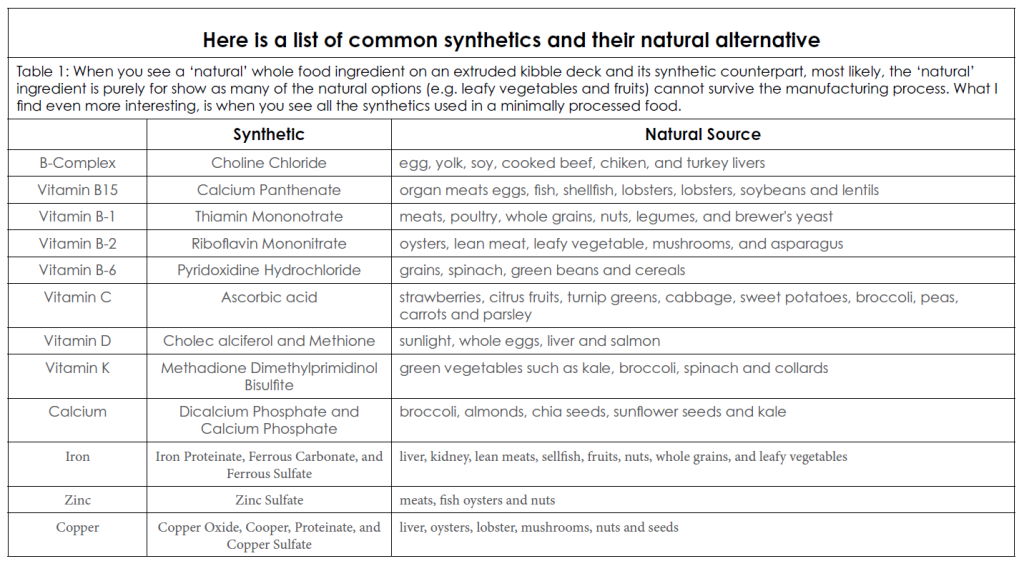
When you see a ‘natural’ whole food ingredient on an extruded kibble deck and its synthetic counterpart, most likely, the ‘natural’ ingredient is purely for show as many of the natural options (e.g. leafy vegetables and fruits) cannot survive the manufacturing process. What I find even more interesting, is when you see all the synthetics used in a minimally processed food.
Freeze-dried food
In freeze-drying, ingredients are mixed, formed and frozen and then moved into a sublimation chamber. Without the extreme pressures and heat, why would you need to supplement with anything synthetic?
Look at this ‘leading’ freeze-dried food:
Chicken with Ground Bone, Chicken Liver, Chicken Gizzard, Pumpkin Seed, Organic Cranberries, Organic Spinach, Organic Broccoli, Organic Beets, Organic Carrots, Organic Squash, Organic Blueberries, Fenugreek Seed, Potassium Chloride, Dried Kelp, Sodium Phosphate, Mixed Tocopherols (preservative), Choline Chloride, Dried Pediococcus Acidilactici fermentation product, Dried Lactobacillus Acidophilus fermentation product, Dried Bifidobacterium Longum fermentation product, Dried Bacillus Coagulans fermentation product, Zinc Proteinate, Iron Proteinate, Taurine, Calcium Carbonate, Vitamin E Supplement, Thiamine Mononitrate, Copper Proteinate, Manganese Proteinate, Sodium Selenite, Niacin Supplement, D-calcium Pantothenate, Riboflavin Supplement, Vitamin A Supplement, Vitamin D3 Supplement, Vitamin B12 Supplement, Pyridoxine Hydrochloride, Folic Acid
Even though freeze-dried is usually considered a ‘minimally processed’ food, this diet must be considered an ultra-processed food because so many of the ingredients themselves are ultra processed. Why? You would have to imagine this is being done to 1) increase yield 2) supplement inferior ingredients 3) lower ingredient costs or 4) all of the above.
How about frozen/’fresh’ food? If you think it is any different, think again! Here is an example of one of the more popular diets in that category:
Chicken Thighs, Long Grain White Rice, Spinach, Carrots, Apples, Chicken Gizzards, Chicken Liver, Fish Oil, Dicalcium Phosphate, Calcium Carbonate, Salt, Choline Bitartrate, Potassium Iodide, Zinc Amino Acid Chelate, Magnesium Amino Acid Chelate, Vitamin E Supplement, Ferrous Amino Acid Chelate, Copper Amino Acid Chelate, Cholecalciferol (source of Vitamin D3), d-Calcium Pantothenate, Riboflavin, Vitamin B12 Supplement
Seeing reality
A conclusion that you can draw is the importance of education, intellectual curiosity, and critical thinking. In order to achieve actual knowledge, you must be willing to question what is presented to you as well as challenge your own assumptions. It is critical to examine reality from as many different perspectives as you can and break free from the constraints of spoon fed misconceptions.
There is nothing ‘raw’, ‘fresh’ or ‘all natural’ about the majority of petfoods being sold today. The costs of petfoods continue to increase, disproportionately to inflation, and manufacturers continue to make obscene amounts of money. A lot of companies have added more and more synthetics over the last few years, and it isn’t for the health and benefit of our pets. When you do the research, you realise that the problem isn’t just about marketing or influence, it is that these claims mislead consumers and are harming our pets. For manufacturers, use those profits to truly innovate within the industry. Remember, millions of people are trusting you to do what is best for their pets, not your pocketbooks!
Published in the April 2025 issue of International Petfood