Industry trends and regional perspectives
In the rapidly advancing petfood industry, manufacturers are challenged to adapt to shifting consumer demands while maintaining competitiveness. The focus on premium, nutritionally rich, and diverse petfoods is driving the need for innovative production technologies. Wenger, known for its leadership in extrusion technology, recently introduced the PetFLEX™ extruder—an innovation poised to significantly impact the petfood production landscape, particularly in emerging markets like Latin America.

Introducing PetFLEX™: A key advancement in petfood production
The growing demand for premium petfoods, which often feature fresh ingredients and advanced formulations, is reshaping production needs. Manufacturers are increasingly looking for extrusion technologies capable of handling complex ingredient profiles such as fresh meat and novel grains, while ensuring operational efficiency.
In this context, we spoke with Jim Morgan, Director of Marketing at Wenger, to gain insights into their latest extrusion technology, PetFLEX™.
Can you tell us about PetFLEX™ and what makes it unique?
Jim: Our newest innovation is an extrusion technology called PetFLEX™. This high-volume, high-thermal energy extruder features a unique screw design that allows for optimised steam injection. Because it is a twin-screw extruder, it can produce a wide variety of products, from traditional kibble to high fresh meat inclusion products. It can also handle unconventional ingredients. We say this may be the most flexible and versatile extruder ever offered by Wenger.
The industry’s growing need for flexible solutions
The petfood market is rapidly evolving, especially in regions like Latin America, where producers are balancing economic constraints with the need to diversify their product lines. As consumer preferences lean more toward premium and specialised petfoods, regional manufacturers require technologies that offer versatility without compromising cost efficiency.
– What are the standout features of the PetFLEX™ technology, and how does it differentiate from other extrusion technologies?
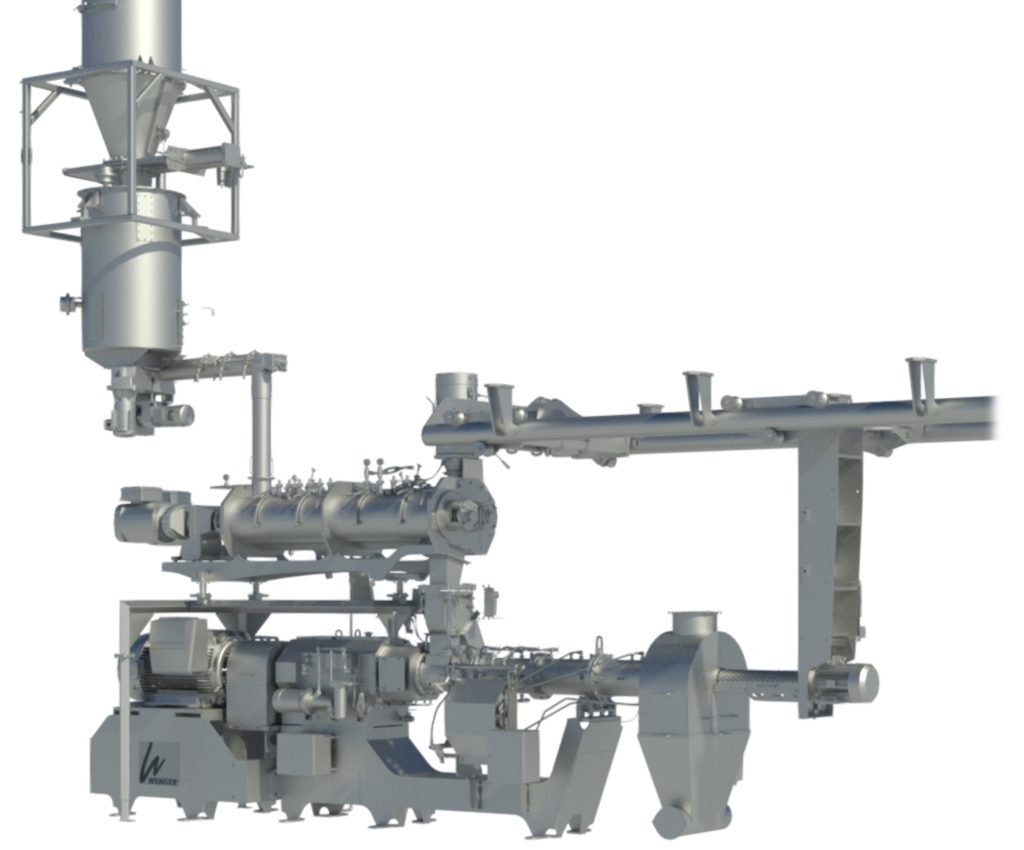
Jim: The PetFLEX™ extruder introduces a groundbreaking innovation in screw geometry—it’s a ‘first of its kind’ design that offers reactive control over the cooking process. What truly sets it apart is the ability to choose the best energy input, whether mechanical or thermal, based on the specific final product being produced. This level of control is unprecedented in the industry. Moreover, PetFLEX™ is the only petfood cooking extruder that doesn’t require changing the screw componentry. One screw setup is versatile enough to handle the full range of possible products. This results in significant up-time and minimal changeover time, which is a massive advantage for producers looking to optimise their operations.
Flexibility as a competitive edge in Latin America
Latin America’s petfood market is experiencing strong growth, with producers recognising the importance of versatile production systems that can accommodate diverse product ranges. The ability to switch between different formulations without extensive reconfiguration is increasingly seen as a competitive advantage.
– Can you explain how the unique screw design and optimised steam injection contribute to the versatility of the machine?
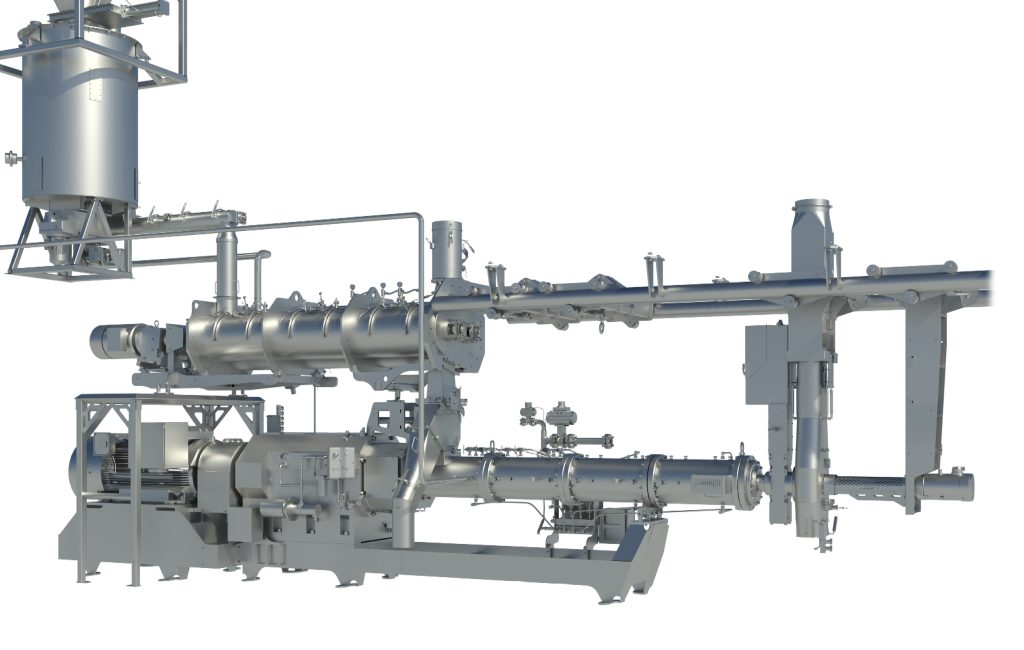
Jim: Traditional cooking extruders were originally based on plasticizing extruders, which rely heavily on mechanical shear to process ingredients. However, petfood production, especially at the premium end, demands a different approach. The PetFLEX™ screw geometry is specifically engineered to cater to the needs of cooking cereal grains, fresh meat, and other unique ingredients that are becoming more prevalent in modern petfoods.
This specialised design, combined with optimised steam injection, allows for a gentler cooking process. The result is a higher quality product, better suited to meet the nutritional needs of pets. This approach also ensures that a wider variety of ingredients can be processed effectively, enhancing the machine’s versatility.
Responding to market trends: High fresh meat content and ingredient diversity
The shift toward higher fresh meat content and varied ingredient inclusion is a global trend, and it’s gaining traction in Latin America as well. As consumers seek more natural and protein rich diets for their pets, manufacturers need equipment capable of processing ingredients like fresh meat, which present unique challenges.
– How does PetFLEX™ accommodate the trend towards higher fresh meat content and diverse ingredient inclusion?
Jim: The trend towards including more fresh meat and diverse ingredients in petfood has presented significant challenges for traditional extrusion technologies. Fresh meat, for instance, introduces higher levels of fat and water into the process, which can be difficult to manage with older extruders.
PetFLEX™ technology is specifically designed to handle these challenges. Its method of cooking accommodates higher levels of fat and water, allowing for the inclusion of fresh meat. Additionally, it significantly widens the operational window for ingredients that are traditionally difficult to process, such as high-starch, high-oil, and water-loving materials. This capability makes PetFLEX™ an ideal choice for producers looking to create premium petfoods that meet the latest consumer demands.
Expanding opportunities in Latin America
Latin American producers are increasingly seeking flexible equipment solutions that can handle the demands of both current and future markets. With a growing preference for premium products and treats, the region is seeing an increase in demand for extrusion technologies that can support diverse ingredient profiles and innovative formulations.
Scott Krebs, President of Wenger Group, highlighted this trend:
“We see a growing opportunity in this region for foods and treats with higher levels of fresh meat content, unique inclusions, and increased palatability. Achieving these types of products requires a more advanced knowledge of extrusion cooking and drying. Our customers can enjoy first-mover advantages by working with Wenger to produce unique (and higher value) products for their market. Demand for traditional kibble will continue to be strong, but producers who can offer a wider range of foods and treats within a single flexible equipment architecture can be even more successful in Latin America.”
Victam LatAm 2025: A platform for industry innovation
Next year’s Victam LatAm 2025, scheduled for September 16- 18 in São Paulo, Brazil, is expected to be a major event for the Latin American petfood industry. As one of the premier events in the region, it will bring together industry leaders, equipment manufacturers, and producers to discuss the latest advancements in petfood production, including cutting-edge technologies like PetFLEX™. For Wenger, Victam LatAm 2025 offers a strategic opportunity to showcase how their innovation aligns with the needs of the growing Latin American market. Don’t miss this chance to explore the future of petfood production and connect with key industry players — mark your calendar for Victam LatAm 2025 and ensure your presence at this essential event.
Published in the September 2024 issue of the International Petfood.