By Dr. Cinzia Boggino Scavone, Business Development Manager & Dr Allison Millican, Global Technical Services, Zinpro Corporation, USA.
Supporting our pet’s happiness, health, and wellbeing is of the utmost importance, as they are more than just our pets, they are family. Thus, when our dog or cat appears sick, unthrifty and/or unhappy, we work to understand the driving factors. One driver is likely inflammation.
Inflammation in cats and dogs is a common factor when the aforementioned symptoms are recognised. Although our first thoughts about inflammation are typically unfavourable, inflammation is imperative to regain health. An appropriate and robust inflammatory response is necessary to repair damaged tissues and battle the bacteria and pathogens making us or our pet’s sick. However, if inflammation persists once the issue is resolved, this can drive a cascade of negative and damaging effects.
Demystifying the Inflammatory Response
When the body recognizes foreign intruders, signals are sent recruiting non-specific immune cells to the area of detection to defend against the invader and enable increased blood flow to the impacted area, surmounting an inflammatory response. Inflammation can be caused by pathogens (germs), viruses, fungi, external injuries, etc. Inflammation can be localized or systemic (throughout the body), manifesting as fever, redness, pain, swelling, and heat. As a principal mechanism of the innate immune system, inflammation aids to eliminate harmful pathogens from the body, yet, when the response is overzealous or sustained beyond what is necessary it perpetuates damage versus repair. The two types of inflammation are categorised as acute and chronic.
• Acute inflammation is the first line of defence to a pathogen or injury. A short-term process where the immune system sends white blood cells to the site of the injury or invasion of the pathogen to initiate the healing process. This response should be rapid and robust, appearing within minutes or hours following activation of an immune response.
• Chronic inflammation occurs when the immune response fails to eliminate the cause of the immune response or acute inflammation. Chronic inflammation can last for weeks, months or longer.
While a robust and appropriate inflammatory response is necessary, excessive, or prolonged inflammation, if not controlled, will become detrimental, damaging healthy tissues, cells, and DNA. Furthermore, immunocompetence is dependent on having appropriate energy and nutrients; therefore, nutrients normally employed for growth, maintenance of tissues, reproduction, or activity are redirected to fuel the inflammatory response. For example, animals with chronic inflammation will likely have poor skin and coat due to the nutrients needed to nourish and maintain skin integrity, shiny coat and paw pad integrity which are diverted to sustain the ongoing inflammatory response. Compounding the issue, illness in our pets often diminishes appetite and food intake.
Linking Poor Gut Integrity to Chronic Inflammation in Cats and Dogs
When dogs or cats experience itchiness or skin irritation, many pet owners seek solutions to alleviate the discomfort and redness. However, some may not realize that the underlying cause of the visible signs of inflammation could be linked to compromised gut health. The epithelial tissues lining the gastrointestinal (GI) tract form a barrier, preventing bacteria, pathogens, and naturally occurring toxins in the gut from passing through the intestinal lining and entering the bloodstream. A breakdown in barrier, results in a condition known as leaky gut. Digestive disturbances or mild-to-moderate food allergies can contribute to leaky gut, leading to loose or runny stools. Indicating damage or irritation within the GI tract, prompting the immune system to focus on this area. Consequently, immune cells are diverted from their usual role of maintaining skin health, exacerbating the skin-related issues in pets and creating inflammation in the GI tract. In addition to dietary factors, compromised gut health can result from psychological stressors, such as irregular feeding schedules for your dog or cat or disruptions to their usual routine. Stressful events, whether physical, environmental (such as heat stress), or psychological, can trigger an increase in cortisol, a stress hormone. Elevated cortisol levels signal a reduction in blood flow to the gut, impacting motility, immune protection, and nutrient absorption, thereby increasing risk of epithelial barrier disruption causing leaky gut.
Barriers and mucus membranes are also part of the innate immune system and remarkably, 60 to 80 percent of the immune system is dedicated to safeguarding the gut against leaks and the resulting damage. Prolonged inflammation progresses the issues, enabling further barrier breakdown. As a result, we may observe disruptions in the skin’s epithelial tissue, leading to hotspots, dry or scaly skin, increased shedding, a coarse or lacklustre coat, the onset of unpleasant odours, irritability, and persistent, bothersome itchiness. Beyond issues related to the integrity of the digestive tract and the condition of the skin and coat, persistent inflammation can contribute to various health challenges in pets, including diabetes, obesity, fatigue, insomnia, depression, anxiety, and an elevated susceptibility to infections. Therefore, effectively addressing and managing inflammation in your family companion is crucial for ensuring their long-term health and wellbeing.
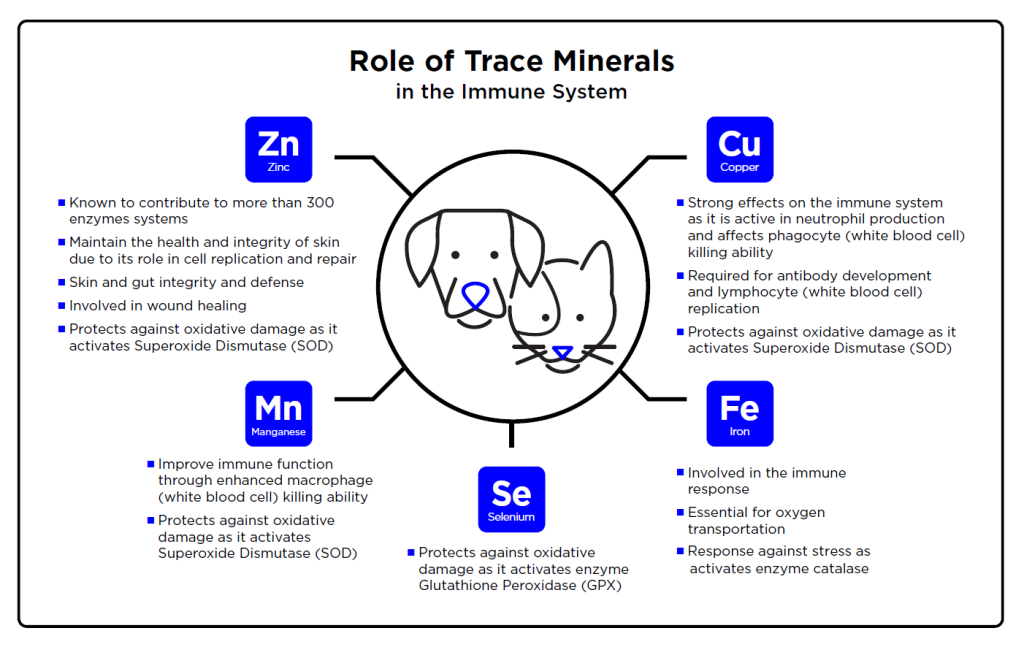
The Vital Significance of Trace Minerals in Immune Health
Although trace minerals, including zinc, iron, manganese, copper, and selenium, are required in modest quantities, their biological impact is immense, serving as structural and catalytic cofactors for proteins and enzyme systems that support whole body health and wellbeing. Given the strict necessity of metals in numerous cellular processes, trace minerals emerge as essential contributors to proper immune function. Delving deeper into their significance, trace minerals prove instrumental in managing chronic inflammation in cats and dogs by fostering a resilient and balanced immune response. They contribute to the formation of robust first-responder cells and maintain equilibrium between pro-inflammatory proteins (cytokines– chemical messengers) and their anti-inflammatory counterparts. Combined, zinc, manganese, copper, iron and selenium join forces through the antioxidant process, as they aid in removing free radicals (inflammatory waste products) from the body, preventing damage. Furthermore, they aid in maintaining epithelial barriers (cellular integrity and tight junctions) that provide the first layer of protection.
Source Matters: Choosing the Right Dietary Trace Minerals
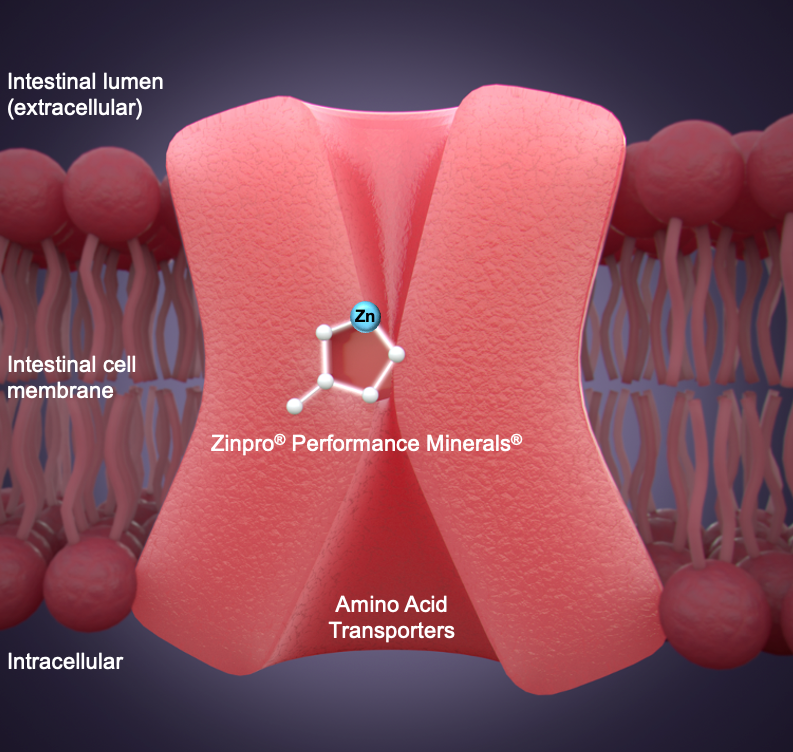
When contemplating trace minerals for dietary inclusion, it’s crucial to understand differences between available sources for supplementation. The primary categories being, traditional inorganic sources, such as oxides and sulphate forms, and organic or chelated alternatives. However, not all organic or chelated trace minerals exhibit equal efficacy. Zinpro® Performance Minerals® are proven to be the most readily available form of trace mineral source on the market. The unique 1:1 bond with an amino acid allows these trace minerals to be absorbed differently, via the amino acid transporters and utilized by the animal more efficiently. Leveraging a distinctive absorption pathway, Zinpro Performance Minerals play a pivotal role in reinforcing the immune system and enhancing epithelial tissues, thereby fostering a resilient and balanced immune response. The stable molecular structure of Zinpro Performance Minerals offers additional benefits by safeguarding essential vitamins against oxidation within vitamin-mineral premixes and maintains complexation throughout processing conditions like extrusion. Diets enriched with Zinpro Performance Minerals provide confidence that the trace minerals provided in the diet are absorbed and utilized to support and maintain a healthy gut and immune system, enabling protection for our pets from pathogens and leaky gut, ensuring their wellbeing and happiness of our four-legged family members.
Article contributed for the January edition of International Petfood Magazine.