by Laura Latišonoka, Tetra Recart Market Support & Product Management Director, Tetra Pak, Sweden
Consumer expectations for petfood continue to evolve as lifestyles change and external forces, including economic pressures to shifting social trends, reshape the market. Pets are treated more like family members, with owners now focused on nutrition and clean label ingredients. In addition, sustainability and convenience increasingly influence petfood choices. Climate conscious consumers now expect recyclable, responsibly sourced packaging and ingredients, while busy owners prioritise easy-to-serve formats that fit seamlessly into everyday routines.
With worldwide petfood sales expected to reach US$152.9 billion in 2025 – an increase of more than US$60 billion since 2019, petfood producers must adapt to these changing consumer expectations to capitalise on the market opportunity.
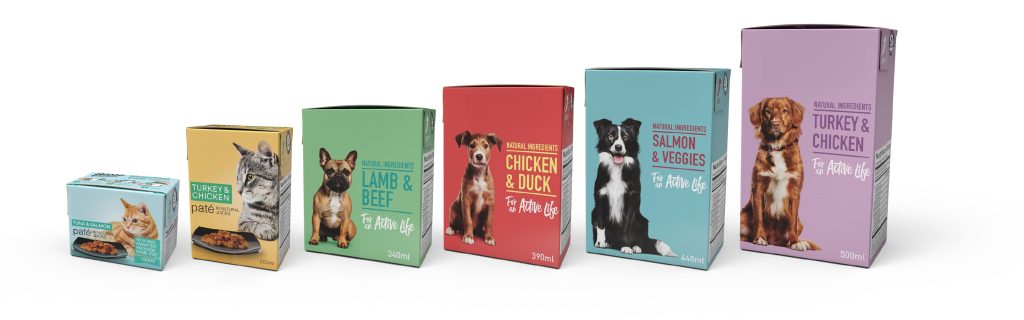
Packaging is a crucial element of this evolution. It is no longer enough for a container to simply protect food; instead, it must deliver a wider range of innovative benefits to consumers and petfood producers alike. Forward looking producers, co-packers and brands increasingly see cartons as the most compelling evolution beyond the traditional can.
The Competitive Option for Producers and Retailers
Carton packaging is rapidly gaining traction as a competitive and innovative alternative in the petfood category. In recent years, supply chains for traditional canned formats have faced significant volatility due to geopolitical disruptions, rising inflation, supply bottlenecks and import restrictions.
Prices are and will continue to rise, therefore producers, brands and retailers are under intense pressure to maintain competitiveness and profitability. As raw material inflation continues to erode margins in metal and glass packaging, cartons have gained credibility as a more predictable, scalable and commercially resilient alternative.
Tetra Recart allows industry players to adopt a modern, more efficient format at a lower cost than their legacy packaging. Its business model maximises supply chain efficiencies, reducing complexity and logistics costs for producers, co-packers and retailers. The carton itself is robust, lightweight and stackable, so its efficient geometry reduces distribution costs from sourcing through retail handling.

Retailers also observe lower in-‑store waste with cartons, as consumers are far less likely to reject slightly damaged cartons compared with dented cans. What’s more, they deliver strong shelf presence both in‑store and online, where the square, screen friendly shape improves visibility and withstands the rigours of e-‑commerce fulfilment. This matters as online retail accelerates: by 2028, 44 percent of global pet products are expected to be purchased online.
As in any industry, sustainability is also increasingly crucial. Pet owners want to know that the products they buy are as kind to the planet as they are to their pets, while producers have sustainability targets and supply chain commitments to meet. Tetra Recart is made primarily from paperboard and have been shown through multiple life cycle assessments to have a substantially lower climate impact than cans and pouches. This carton contains around 70 percent renewable material, including paperboard that is entirely responsibly sourced and FSC-certified, as well as being widely recycled where collection and recycling infrastructure exits at scale.
Leading brands are already taking advantage of these benefits. Lidl became the first retailer in Spain to adopt Tetra Recart for its private-label wet petfood brands. This globally successful retailer chose carton packaging for three main reasons: a desire for much-needed innovation in the petfood space, ambition to make progress on sustainability and the opportunity to offer clear benefits for consumers in terms of practicality, convenience and durability.
Convenience and Need for Re-Closability
The retortable multilayer structure of our carton delivers on the primary purpose of packaging: food protection and safety. But there are also many more benefits that make cartons the more appealing choice.
To understand what consumers want, Tetra Pak asked pet owners about their pet peeves. One of the most frequently mentioned issues was a lack of resealable packaging: 57 perceent of those surveyed say they found themselves wasting food because they couldn’t easily store it after it had been opened. Around half of consumers say packages lose product when opened, creating mess and hygiene concerns as well as food waste. When a package is difficult to open and can’t be resealed, owners are forced to transfer the leftovers into another container or are stuck with an open container smelling in the fridge, both of which are inconvenient and likely to increase wastage.
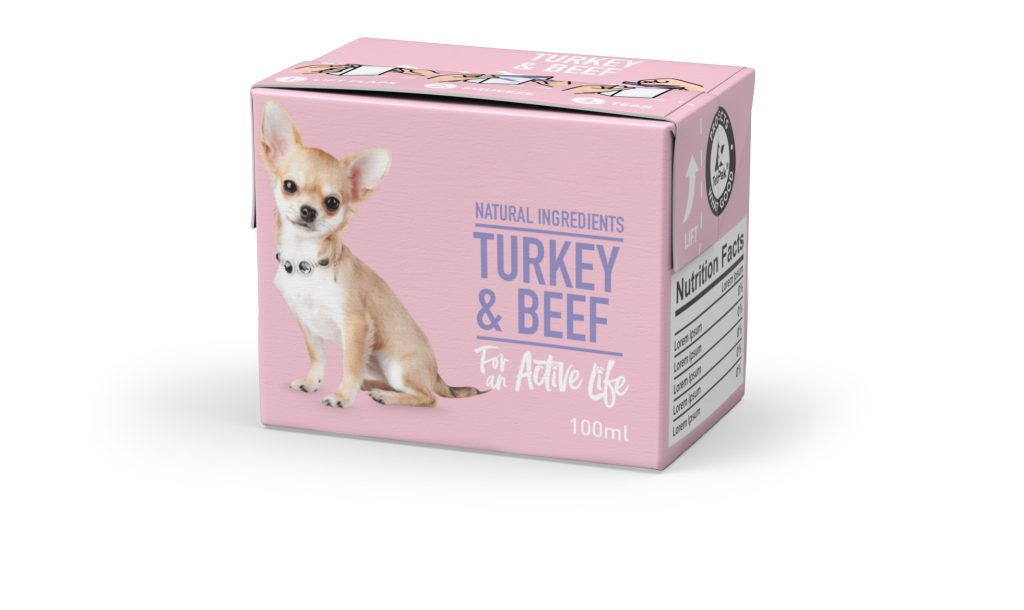
Cartons solve these problems with easy opening and controlled pouring. Their rectangular shape means smooth flat walls that make it easier to get every last bit of product into your pet’s bowl. And re-closable openings make it easier to save multiple servings, delivering on the need for convenience in busy modern lifestyles.
The recent launch of Nestlé Purina Beneful in Tetra Recart in the US demonstrates how consumers value convenient, reclosable formats that support multiple servings for dogs. The carton allows owners to see the product, choose the right portion size, and store leftovers safely, helping reduce petfood waste. Social media reactions highlight additional advantages: shoppers appreciate the lightweight, easy-to-handle format, improved product visibility and the fact that the pack is recyclable and more sustainable than traditional cans.
An Innovative Format for Logistical Efficiencies
The logistical efficiencies of cartons begin long before they get to shelves. Empty cartons are folded flat for delivery to producers, meaning six to ten times more packaging can be delivered per pallet compared to cans or jars. Then, once filled, the rectangular shape allows each pallet and truck to carry more product, which weighs significantly less compared to equivalent can formats. Pre-formed packaging such as cans and jars also require extra components like lids and labels, which means production and processing comes with more complexity and labour demand.

Tetra Recart also has a strong global co-packing network providing new possibilities for emerging petfood brands across all regions. Collaborating with Tetra Pak can accelerate and de-risk innovation, allowing companies to introduce innovative wet food products without prohibitive initial capital investment, making advanced packaging formats more accessible.
The Future of Petfood
The future of petfood is set to be one of the most dynamic and innovative areas in the global food landscape. High quality nutrition will remain at the forefront, with growing demand for tailored diets and functional ingredients that address diverse health needs and adapt to the increasingly versatile lifestyles of pet owners. As product choice expands, consumers will rely more on clear, accessible guidance not only on nutrition and ingredients but also on packaging functionality and added value. This includes a rising expectation that packaging should support convenience, protect product quality and align with sustainability values.
In this context, carton packaging stands out as a promising format for today and the future, meeting emerging regulatory expectations while aligning closely with increasing consumer preference over cans. Its combination of renewability, ease of recycling, convenience and strong shelf presence positions it well for the evolving marketplace. Brands that embrace novel formats, improve distribution and cost efficiency and keep innovating despite market pressures will strengthen their competitive edge.