by Thaila Putarov, Global Pet Lead, Phileo by Lesaffre, Brazil; Russell Kelley, Global Program Manager – Pets, Phileo by Lesaffre, USA, and Letícia Carvalho, Strategic Marketing, Biorigin, Brazil.
Our Industry is experiencing a significant transformation in how we relate to our pets. Pet owners are increasingly adopting a humanised approach, aligning their animal care with their own values and lifestyle, including what they choose to feed their pets. According to research, 68.6 percent of respondents globally consider pets an integral part of the family. Another study finds that 65 percent of German pet owners believe their pets’ diet directly affects their emotional well-being.
Furthermore, pet owners seek foods that offer health benefits and are available in different formats. In Brazil, 83 percent of pet owners believe it is important to offer a varied diet, while 37 percent of buyers in the USA (both dog and cat) indicate that the pet’s taste preference is one of the main purchasing factors. In other words, the food’s appearance is relevant, as pet owners tend to associate colour and texture with quality and taste. Therefore, it is important for brands to invest in visually appealing, tasty products to meet the expectations of an increasingly demanding, emotionally engaged audience at mealtimes.
In this context, the pet nutrition market sees a significant opportunity: to innovate in the snack segment and in products that meet pets’ needs and the emotional expectations of their owners across multiple formats. After all, different types, flavours and textures help stimulate the senses and make mealtimes an enjoyable event.
In this article, we will show how yeast extracts can be great allies to the petfood industry, helping develop more palatable, healthy foods that are aligned with pet owners’ values while promoting well-being, sustainability and an enhanced human-animal bond.
Importance of palatability in petfood
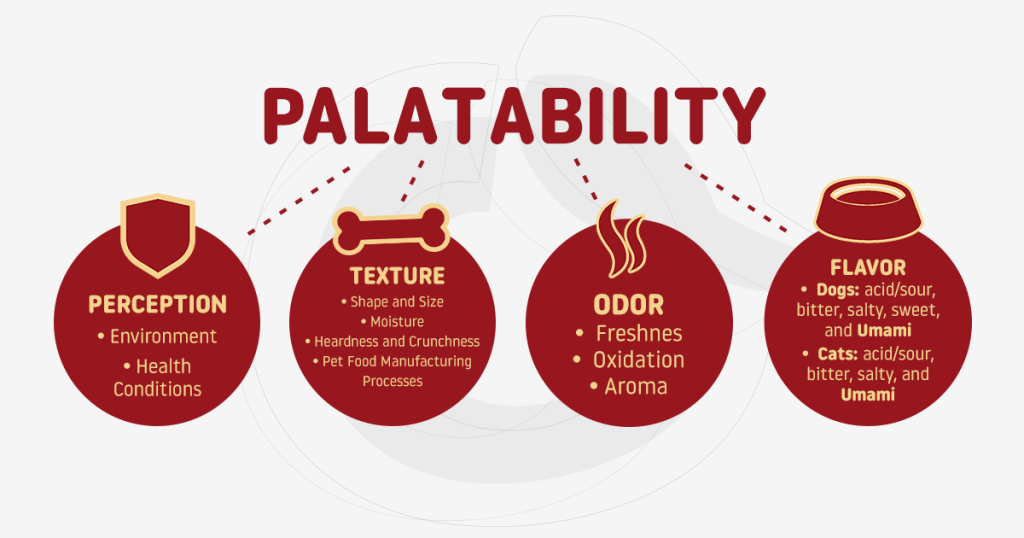
As with humans, the appreciation of food plays an important role in animal nutrition, ensuring they consume the nutrients they need. The palatability of a food involves a combination of factors, including texture, shape, odour, flavour and mouthfeel. It also plays a fundamental role in improving the taste of foods for special diets, balancing essential nutrients and vitamin levels, and providing a pleasant taste for animals.
In other words, palatability refers to how appetising and desirable the food is to pets and how their owners perceive it. After all, dogs and cats have their preferences and may reject foods that don’t meet their individual tastes. Among the crucial points that affect palatability, the following stand out: perception, texture, odour and flavour.
In short, palatability plays a fundamental role in the nutrition of dogs and cats. Keep in mind, even if food contains all the necessary nutrients, it will not be effective if not consumed.
Role of yeast in petfood palatability
Choosing the right ingredients and flavour enhancers for petfood production is essential for differentiating brands in the market. This increases the likelihood of achieving optimal palatability and gaining pets’ approval.
Among the natural enhancers frequently used are yeasts, essential oils, fats, vegetable oils, organic acids, spray-dried animal plasma, protein hydrolysate, distillates and roasting and heating products. Yeast extracts can be incorporated directly or applied as a coating, along with other palatability enhancers, in various petfood formulations, from extruded dry diets to nutraceutical compounds.
Adding yeast extracts to food stimulates the palates of dogs and cats, as they have an appealing, umami-rich flavour. In addition to this benefit, the consumption and utilisation of specific amino acids can be optimised along with providing both sweet and salty flavours. The palatability of a food goes far beyond its taste. It results from a combination of various sensory factors that directly influence how pets accept food. And, just as with humans, the pleasure of eating is essential for animals to consume the right amount of nutrients and vitamins in an enjoyable way.
How to improve palatability and functionality in petfood
Thaila Cristina Putarov, Global Business Manager for Animal Nutrition and Health at Biorigin, shares how the ingredients developed by the company can support the animal nutrition industry in creating high-quality functional foods that simultaneously promote greater palatability and acceptance by dogs and cats:
“Pet owners are increasingly attentive to the quality, naturalness and functionality of ingredients. Therefore, the need for natural, vegan and highly safe solutions, such as those derived from the soluble intracellular content of yeast cells, typically Saccharomyces cerevisiae, through processes such as autolysis or enzymatic hydrolysis, is essential for formulations that seek to support essential functions such as digestion, immunity and sensory acceptance. After all, yeast enables nutritional customisation, supporting brands to create products tailored to pets’ different life stages, health needs and their owners’ preferences.”
Among natural flavour enhancers commonly used in petfood, yeast extracts stand out for their ability to enhance taste perception.
Russell Kelley, Global Program Manager – Pets at Phileo by Lesaffre, states: “In dogs and cats, it especially intensifies the umami flavour, the fifth basic taste, associated with savoury and meaty notes. The result is a highly digestible, hypoallergenic ingredient rich in peptides, amino acids, nucleotides and B vitamins, with proven functionality in both nutrition and sensory enhancement. Collectively, these properties enable the development of flavourful nutrient rich formulations tailored to each animal’s specific needs.”
At the intersection of science and animal welfare, natural yeast extracts are widely used in the food industry. Yeast extracts offer strategic solutions for dry and wet formulations because they contain a high content of free glutamic acid, which intensifies the umami flavour, adding value to formulations and allowing the creation of specific profiles that enrich the pet’s feeding experience. As high-quality ingredients, they add sensory and functional value to diets and drive personalisation in the pet industry, contributing to brand differentiation and competitiveness.
Beyond its functional benefits, yeast is a vegan, clean-label ingredient, ideal for companies that promote sustainability and seek to develop products with cleaner, more transparent and more responsible labels. This evolution of yeast is the result of accumulated experience in human nutrition, now applied to animal nutrition, to make petfood more palatable, safe and aligned with humanisation trends.
In a scenario where pet owners demand more natural and functional foods aligned with health and sustainability values, it is necessary to seek out companies that are strategic partners in the animal nutrition industry. Contact the company to obtain more information about the applications of yeast extract and how to create a more meaningful experience for both pet owners and their pets.