by Jennifer Adolphe, Pet Technical Services Manager, ADM, Canada
As the world’s population continues to increase, responsible protein production is of critical importance for food security and environmental impact. Producing more food in a more economical and sustainable way will be a key challenge for decades.
Pet parents recognise this challenge too, with many looking to petfoods and treats that can assist in minimising environmental impact. For instance, 42 percent of global pet parents say they want to purchase petfood with sustainably sourced ingredients. Alternative proteins, including plant, insect, and cell-based sources, are promising solutions that present a new growth frontier to address these pressing needs.
Insect ingredients take flight
Insect farming has the potential to relieve some of the pressure on the global food supply chain, from minimising waste and greenhouse gas emissions to complementing traditional protein production in a highly efficient way. It requires less land, water and feed than conventional livestock farming to produce equivalent amounts of protein. Insect-based ingredients can be used as nutritious feed sources for livestock as well as high-quality food for pets and humans. In fact, many species of wild canids and felids consume insects as a significant part of their diet.
At the same time, consumer education is key to increasing acceptance of insect protein in petfoods, as many owners are wary of unconventional ingredients. By informing consumers about the nutritional value, sustainability and safety of insect protein, companies can address misconceptions and build trust. As awareness grows, pet owners are more likely to view insect protein as a healthy and responsible choice for their pets. In fact, a recent ADM survey shows that additional education makes 42 percent of pet owners more likely to feed their petfood with insect protein.
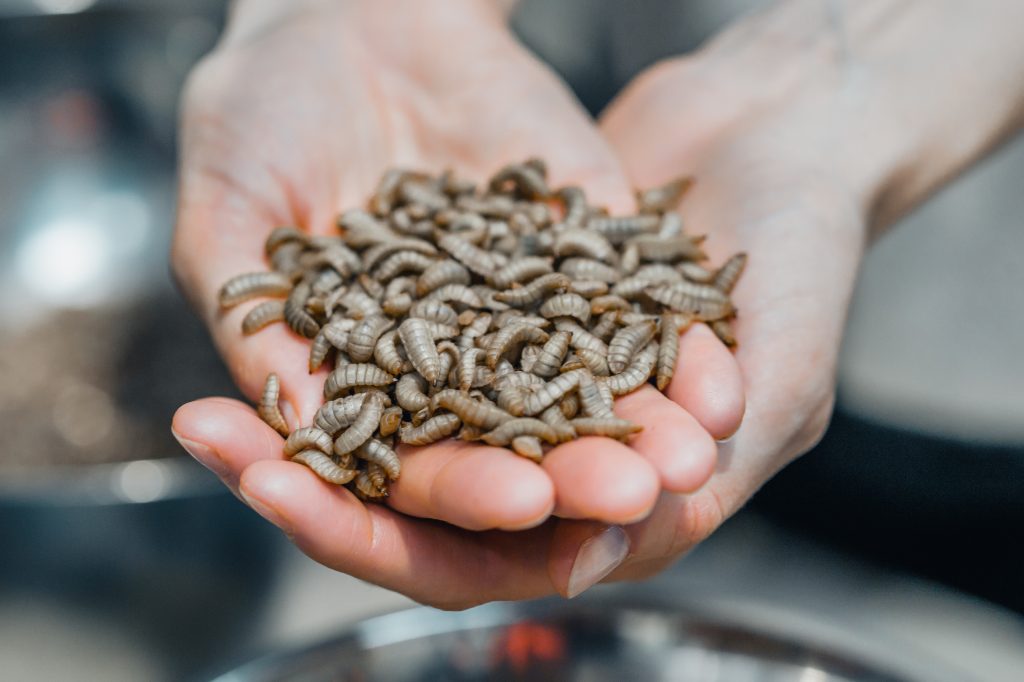
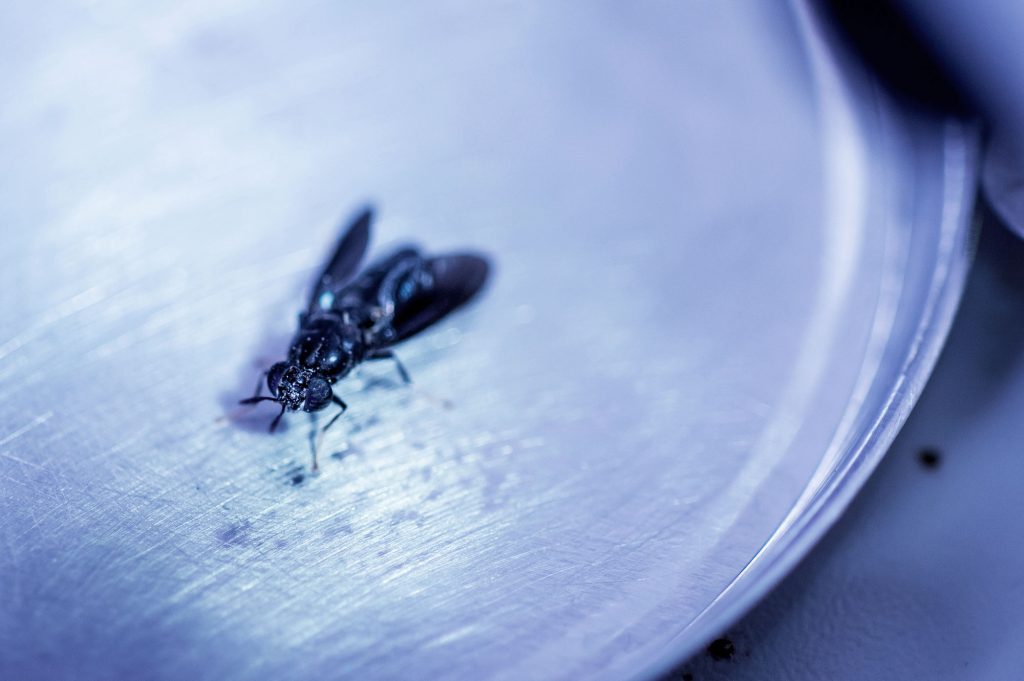
Insect-derived ingredients currently used in pet products include the black soldier fly (Hermetia illucens). Black soldier fly larvae (BSFL) consume agricultural and processing byproducts from grain and are then harvested as highly digestible, alternative sources of amino acids, fatty acids and other key nutritional components. The BSFL diet plays an important role because it impacts the quality of the ingredients produced from the larvae.
French agtech company Innovafeed is a leading producer of premium-quality BSFL ingredients for pets, Hilucia™ Protein and Oil. Petfood ingredients need consistent nutrient levels, and Innovafeed scientists ensure its BSFL are raised on an ideal and repeatable blend of ingredients that provide strong growth and consistent high yields of protein and oil to satisfy pets’ dietary needs.
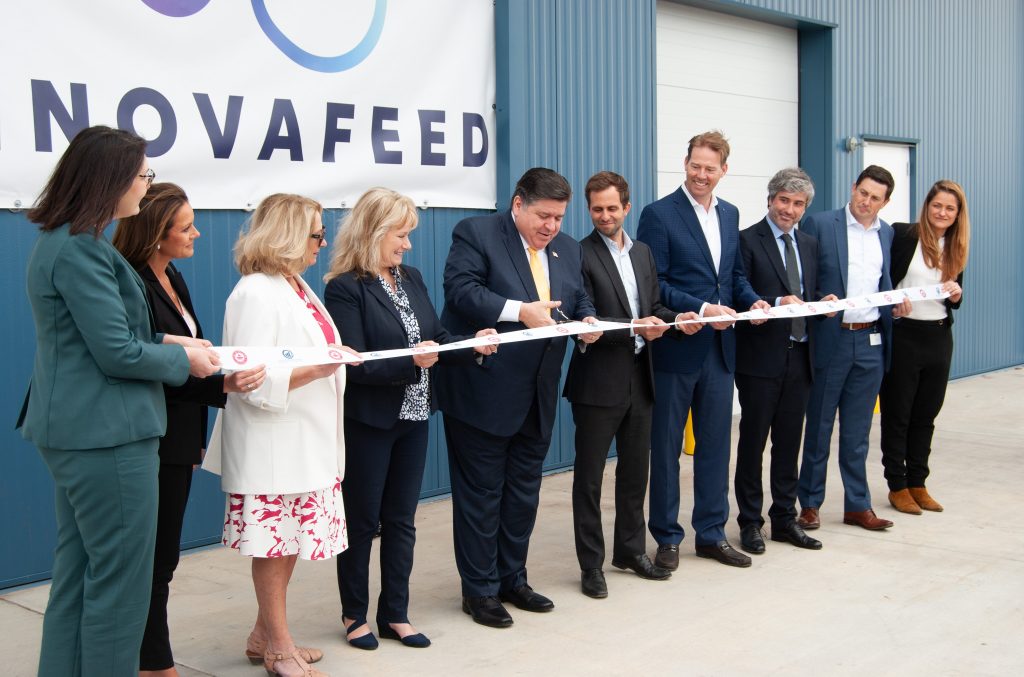
Innovafeed employs an ‘industrial symbiosis’ production model, where indoor insect farms are strategically located alongside grain processing facilities, creating a closed-loop agricultural system. At its facilities in France, Innovafeed uses wheat-based byproducts as feedstock for BSFL. In the United States, the company has partnered with ADM to leverage its wet corn byproducts. This co-location will eliminate both the need to dry the feedstock and the trucks required for transport, reducing energy and fuel needs. Additionally, Innovafeed plans to use reclaimed heat and water from ADM’s facility to further conserve energy.
“We want to drive down carbon emissions in food chains and replace ingredients that put pressure on natural resources, and the way to do that is through scale,” said Maye Walraven, North American General Manager and Chief Impact Officer at Innovafeed.
Links along the value chain
Several organisations are leading explorations of insect proteins as a sustainable food source. For example, the Center for Environmental Sustainability through Insect Farming (CEIF) was established as an Industry/University Cooperative Research Center with a grant from the National Science Foundation (NSF). CEIF bridges industry with interdisciplinary experts from academia who provide high-quality research on insect farming to advance the production of insect ingredients for animal feed, petfood and even human food.
Launched in 2021, CEIF is composed of three university sites, each with a specific research focus. Texas A&M examines production optimisation and feed trials, Indiana University Indianapolis studies genetics and genomics, and Mississippi State University explores quality assurance related to microbiology. Companies in the US and abroad that have partnered with CEIF include major ingredient suppliers like ADM, leading petfood companies like Mars and Hill’s, insect farming pioneers such as Innovafeed, and many others.
In 2024, CEIF industry members voted to endorse a fourth university site at the University of Illinois Urbana-Champaign, to be led by Dr Maria R. C. de Godoy, Associate Professor in the Department of Animal Sciences. This new site would focus on research to drive the adoption of insects as ingredients for petfood, and NSF is currently reviewing the proposal to add this fourth location.
“Adding a fourth site focused on animal nutrition will allow the industry to unlock and diversify the insects as food and feed industry under the umbrella of the bioeconomy to truly impact sustainable agriculture while creating new jobs,” noted Dr Jeffery Tomberlin, Professor at Texas A&M University and CEIF Center Director.
The Pet Sustainability Coalition is another useful resource in implementing sustainable business processes. This nonprofit organisation is dedicated to creating a more sustainable pet industry by providing assessment tools, strategic support, accreditation and events. Members of the coalition include consumer brands, suppliers, pet trade media, retail stores, packaging companies and more.
Revitalising petfood
Globally, 66 percent of pet owners are worried about climate change and try to have a positive impact on the environment through their actions. And while insect ingredients are abuzz, environmentally conscious consumers are also aware of other ingredient options within the formulation matrix. Plant and yeast-based proteins can be used in petfood and treats to supplement or replace animal proteins without sacrificing nutrition or palatability. However, today’s discerning pet parents want information about the environmental impact of the products they purchase – from where and how ingredients are grown, to how the foods are produced and packaged – to influence their purchasing behaviours.
Working to address these concerns, Mars recently announced several partnerships to support regenerative agriculture transitions across its North American petfood supply chain, including a collaboration between ADM, Royal Canin USA and Mars Petcare US, Inc. These partnerships aim to encourage wheat, corn and rice farmers in select regions of North America to implement regenerative agriculture practices, contributing to carbon reductions as part of the Mars Net Zero Roadmap.
The company defines regenerative agriculture as an outcome-based farming approach that protects and improves soil health, biodiversity, climate and water resources while supporting farming business development. This partnership will work towards identifying and accounting for environmental benefits, including improved water quality, soil health and biodiversity. The initiative aims to promote practices such as reduced tillage and cover crops on more than 100,000 acres in 2024, supporting outcomes like reduced fertilizer use and an improved carbon footprint.
“Royal Canin is committed to offering pet owners sustainable choices when feeding their pets, and that starts, in part, with how their food is grown,” said Racquel White, Vice President Corporate Affairs, Royal Canin. “We are committed to working with suppliers and partners to help farmers implement agriculture practices to help reduce our carbon footprint and support the resilience of the people throughout our supply chains.”
Beyond traditional grain ingredients, petfood companies are also exploring a variety of plant-based proteins, such as pea, soy, navy bean, chickpea (garbanzo beans), green lentils and potato. This comes at a time when four out of five pet parents are willing to purchase petfoods and treats containing soy, corn or wheat. Notably, pet parents are seeking or open to soy (80 percent), corn (81 percent) and wheat (84 percent) for their pets because they recognise the nutritional and health benefits these ingredients provide to their pet. Attributes like flavour and digestibility were also listed as key motivators for choosing products that include these ingredients. The company’s nutritionists have done extensive research on the nutritional composition and biological availability of various alternative protein sources to help advise petfood formulators on their integration.
Future generations today
With more pets in the home than ever, there is a growing urgency to provide pet products that have less impact on the environment. This demand is driven by consumer preferences, corporate initiatives and public policy. Cooperative efforts led by Innovafeed, CEIF, the Pet Sustainability Coalition, Mars, ADM and other like-minded organisations will help accelerate widescale adoption of emerging and alternative ingredients, and aid progress towards a circular economy.
Published in the December 2024 issue of International Petfood.